Most Influential Books Part 1

Sometimes a book doesn’t have to be brilliant to have a major impact on your life. Sometimes it has to simply have the right message (assuming it is a truthful message, of course) at the right time. I’m a firm believer that books change lives and see us through the bright and the dull and the pain.

Of course the one constant book in my life has been The Book – the “Good Book.”  The scripture certainly has no rival in any library. There are no other pieces of literature that even play on the same field. It’s advantage, of course, is that it is alive. Not metaphorically, not allegorically, not even in the way that it makes us feel alive as if it were the sum of its’ effects or stimulations on the reader. Rather, its’ words are used by the Spirit of God to wake us up to unrealized truths as He begins to work in our minds and in our hearts. Christianity is not a “blind faith”, it is an informed faith which conquers both the mind and the heart.

Therefore, the Bible is unique and simply without rival.

Nevertheless, Providence has seen fit to use other literature in my life to bless me, entertain and brighten my day, and deepen my relationship with Him and others, all the while growing in my appreciation for life and creation and many other undeserved blessings.

Here are the books that have impacted me the most at the ripe old age of 31 – note that these aren’t all necessarily “favorites” per se, there are some I have no desire to read again, but all that will be made plain as you scroll through the selections.  There are so many of these that I think I’ll roll them out in a series.  There are far too many to write (or read) about before you fall asleep of boredom.  So here (in no particular order) goes the first five in the series…

  1. Pride and Prejudice – Jane Austin’s masterpiece saw me through one of the worst illnesses I’ve had (which is saying something) – 10 days in bed with pneumonia.  I own several copies of this one, and will probably keep collecting nice editions. I love to open its pages and just get lost for a few minutes in laughter and pros. The writing is superb and brings me back to my childhood where we would watch the six-hour movie edition over and over again. We’d poke fun at the characters and put ourselves in their shoes as we watched the social instability and family upheaval course through the plot. It never gets old, and will always be one of my favorite books/stories of all time.
  2. Leadership as an Identity – I got this book for free at my church and it transformed the way I thought about pride and leadership – especially as a dad. It spoke very powerfully to me and brought my heart to a place where I was more open to leading my home as I ought to. I really appreciate Crawford Loritts’ writing and think he brings a unique perspective to the leadership book collection.
  3. Defending Your Faith – This was my one of my first encounters with Theologian R.C. Sproul and it whetted my appetite for more.  His intellectual approach drove me to understand that all truth is God’s truth. This is a book on apologetics and it is framed in a classical style, which means that he isn’t going to spend as much time on proofs for the resurrection or other modern arguments, but will address much of the philosophical and even scientific ground that Anselm, Aquinas, Newton and other master theologians and thinkers have laid down in bygone eras. As I read this I began to see that being a Christian didn’t mean I had to sacrifice my intellect. Read this book cautiously, it may open the door to deeper waters….
  4. The Religious Affections – This is a more recent one for me, though it is largely considered to be Jonathan Edwards’ magnum opus, I had not cracked it open until just last week.  It took me a week or so to traverse its 400 pages, but it was well worth the journey.  This is not a book for a young Christian, this is a book for someone who has read pretty widely and is now ready for the deeper things of God. However, if you have not at least sampled Jonathan Edwards’ work, this would be a great one to pickup and scroll through. The book seeks to explain the essence of what the true Christian life consists of, looks like, and how we can know we are truly Christians at all. Through many rigorous examinations I found again and again both challenges and assurances that woke me up to some things, and also secured my mind and soul in many ways. The influence this book has had has been significant even this week in shaping my thought and confirming many of my beliefs. I can tell this is going to be one I go back to time and time again, year after year. This is one for your book bucket list!
  5. Chosen by God – There may not be another book in recent memory that has so greatly altered and impacted my life as this classic by R.C. Sproul. I had read a few of his other books in recent months and wanted to keep going. This one seemed like another popular work from him, so I picked up a used copy and started pouring over the pages.  What ensued was nothing short of life changing. The book details how God’s election of sinners to salvation works. It confronts Calvinism (so-called) head on, and shows how men interact with these ideas, which as it turns out are rock solid Biblical teachings. There were several moments where I felt that the book had a great impact on me and others around me.  During an airplane trip for business with my business partner Matt, we got into a quite a severe argument based on the book’s propositions.  I was just starting to put the pieces together from all that I had studied growing up, and Matt was deeply offended at the idea that God chose people and not the other way around (at least that He is the antecedent Chooser). His temper flared, and the argument spilled out into the Nashville Airport (BNA) where we were awaiting a connecting flight. I was not an expert on theology at the time, but I knew Romans like the back of my hand, so everything Dr. Sproul said was clicking with me…but not with Matt.  I challenged Matt to read the book and sort it out for himself. A few days later, I returned home from the trip and had kept up my reading when around 2am one evening as I was sitting in the living room of my house I realized all at once that I had been a fool.  I had such a pride about my learning and my salvation and what hit me was that I was a moron…literally.  I knew nothing and was responsible for nothing good ultimately in my life. I got down on my knees and with tear-filled eyes prayed for forgiveness for my pride and ignorance about spiritual things.  Not long after that Matt read the book as well and his eyes were opened.  It was a transforming experience.  Soon he went to seminary and began pastoring a small church, I followed suit and enrolled at Southern Seminary in Louisville a few years later after much more learning, reading, and praying. I still have that copy of ‘Chosen by God’ and now its signed on the inside cover by its author, and is more marked and highlighted than those several years ago when I first turned its pages.

Stay tuned for my next installment of ‘most influential books’…

These Words are Your Life

I have observed as a general rule that mankind tends to put off big decisions, big tasks and deep thinking about the big issues in life until such a time as they cannot be avoided any longer.

The thinking may sound like this, “Sure I know I need to think about religion eventually, but that’s a long ways off…lot’s of life to live before I need to deal with that sort of thing.”

This same attitude has always been prevalent among men.  Perhaps that’s why Moses had these words to say to the Israelites after giving them commands from the Lord:

And when Moses had finished speaking all these words to all Israel, he said to them, “Take to heart all the words by which I am warning you today, that you may command them to your children, that they may be careful to do all the words of this law. For it is no empty word for you, but your very life, and by this word you shall live long in the land that you are going over the Jordan to possess.” (Deuteronomy 32:45-47)

You would think that it would be enough for the people of Israel to simply hear a word from God.  After all, they had seen great and awesome works – miracles that no one had ever seen before.  But Moses wouldn’t have had to say, “it is no empty word for you, but your very life” if there wasn’t a natural tendency to disregard and not take seriously God’s words and God’s commands.

In the New Testament, we see the same thing with Felix and several of the other rulers that Paul testified before during his trial.  He confronted them with such stark and powerful truth that they were forced to put him off.  They didn’t want to deal with life and death decisions – they simply wanted more wine and cheese!

We find the same thing today, and that’s why (I believe) we read Jesus saying things like “I am the way the truth and the life” – He wants us to understand in no uncertain terms that His words are not “empty” or simply prophetic, or merely good for instruction.  To follow the teaching of Jesus is to make life and death decisions.

The Apostle John later affirmed this in his first epistle:

Whoever believes in the Son of God has the testimony in himself. Whoever does not believe God has made him a liar, because he has not believed in the testimony that God has borne concerning his Son. 11 And this is the testimony, that God gave us eternal life, and this life is in his Son. 12 Whoever has the Son has life; whoever does not have the Son of God does not have life. (1 John 5:10-12)

Perhaps you would agree with me that these are “big” topics.  You ought not to open the Bible simply to read bedtime stories.  And what is more, most homes in America own a Bible of some kind, yet it sits there neglected.  The words of life, ignored. Night after night we watch our favorite television show, and delay the bigger things in life.  We know the truth is out there…but that can wait until tomorrow…can’t it?

To ask the question is to answer it.

Furthermore, if you are a Christian and you are not regularly reading the word of God you are depriving yourself.  You are cutting off the oxygen of the Christian life, and you are doomed to go through life with little wisdom and no joy.  I want to encourage you to pick up the Word – be intentional and have a plan.  Get some accountability and read the Word with someone.  Do not neglect the excellent in place of the average.  Do not neglect life in place of death.

I’ll leave you with the words of Jesus:

Abide in me, and I in you. As the branch cannot bear fruit by itself, unless it abides in the vine, neither can you, unless you abide in me. I am the vine; you are the branches. Whoever abides in me and I in him, he it is that bears much fruit, for apart from me you can do nothing. If anyone does not abide in me he is thrown away like a branch and withers; and the branches are gathered, thrown into the fire, and burned. If you abide in me, and my words abide in you, ask whatever you wish, and it will be done for you. (John 15:4-7)

A Light to the World

In Matthew’s gospel, we are given an extended sermon by the Lord Jesus that has (for centuries I believe) been called ‘The Sermon on the Mount.’  A few years ago a friend of mine challenged me to try and memorize the whole thing – all three chapters!  

Well, I’m happy to say that I got chapter five done, after that…well, I gave up sad to say.  But one of the many things that stuck with me was Jesus’ instructions – his command – to be a light to the world.  To show the world what it is to be rightly related to Him, and to have the blessings of a relationship with Him.

This is what He said:

“You are the light of the world. A city set on a hill cannot be hidden. Nor do people light a lamp and put it under a basket, but on a stand, and it gives light to all in the house. In the same way, let your light shine before others, so that they may see your good works and give glory to your Father who is in heaven. (Matthew 5:14-16)

God has always wanted His chosen people to show the world what it means to have a relationship with Him.  The same was also true in the Old Testament of Israel.

In Peter Gentry’s exposition of the Davidic Covenant, He refers back to the purposes of the covenant at Sinai and the parallels to Christ’s sermon are strong.  Here’s what Gentry has to say:

The divine purpose in the covenant established between God and Israel at Sinai is unfolded in Exodus 19:3-6. As a kingdom of priests, they will function to make the ways of God known to the nations and also to bring the nations into a right relationship with God. Since Israel is located geographically on the one and only communications link between the great superpowers of the ancient world (I believe Gentry means Babylon and Egypt), in this position she will show the nations how to have a right relationship to God, how to treat each other in a truly human way, and how to be faithful stewards of the earth’s resources. This is the meaning of Israel’s sonship.

This weekend, as you interact with friends and family and strangers over dinner, at the bus stop, at the cell phone store or wherever, I hope you remember that if you are a Christian you are a son or daughter of God. Others who know this ought to see in you something different – something of a changed heart accompanied by changed words and behavior.  Kindness motivated by and rooted in love is the light Christ has planted within every Christian – this weekend I pray you yield to its burning within.  Confess your sins; be reconciled to your fellow man and to God. And show love to others in joyful gratitude for all that you have in this life and the next.

Intro to Christian Creation Views

Recently I took part in a seminary project that had each participant trying to boil down, to as simple of terms as possible, an introduction to Christian belief about God’s role and power of creation.  Ideally the introduction would include several Scripture references that would point the listener/reader to places for additional study.  The idea was not to create a polemic against other views, but rather state in a simple, straightforward way the Christian view as an introduction.

I thought that perhaps you might enjoy the short read of what I put together, with the hope that it spurs on further thought, and serves to edify you in future conversations.

A Short Introduction to Christian Belief on Creation

As a Christian, I believe that God is the creator of all things – that means the trees and sky and stars, and also animals and human beings.  My confidence in God as creator is grounded in my confidence in the Bible as the authoritative and accurate word of God (2 Tim. 3:15-17, 2 Pet. 1:20-21). In fact, Moses, who wrote the creation account in the book of Genesis, often said that his words were not his, but God’s (Ex. 24:4, Ex. 34:27-28, Num. 33:1-2, Deut. 31:9).

The Bible begins by telling us about how we began, and how the world came into being (Gen. 1-2).  In these early chapters we find details that amaze us, and also leave us asking questions. We aren’t given all the answers to the questions, but rather we are given everything we need to know to live our lives in a way that pleases God (2 Peter 1:3). And because the Bible says we are created in God’s “image” (Gen. 1:26-27), we also have creative abilities (of a much lesser order!), a desire for beauty, and an appreciation for science and art.  Most importantly, we were made for fellowship with our Maker – which Jesus came to restore (Jn. 10:10).

The ramifications of God being the creator of all things can be see both in nature and in our daily lives.  Nature shows us the intricate and amazing depth of knowledge that God has (Job 38-41, Is. 55:8-11) and reveals a lot about His character (Ps. 19:1-6).  And knowing that God created all things – including you and me – helps us know that we are here for a reason, and that our lives have purpose in His sovereign plan (1 Sam. 2:6-7, Prov. 16:4).  It also reassures us that the One powerful enough to create everything is also in control of everything (Is. 45:6-7, 55:8-11, Dan. 4:35), and rules over all that He created (1 Chron. 29:11, Eph. 1:11).

In the New Testament we learn that Jesus (like the Spirit and the Father) was involved in creating the world (John 1:3, Col. 1:15-20), and maintains an intimate relationship with His creation, which He sustains simply by the power of His word (Heb. 1:3). It is an assuring thought that Jesus both understands our pain (Heb. 4:15, Matthew 4:2, John 19:28 etc.) and what it is like to live upon the earth (1 John 1:1-4, 2 John 7 etc.), yet also created us (Ps. 51), knows every hair on our heads (Luke 12:7), and has a great purpose for our lives (Eph. 1:3-14).

The Poetry of John Piper

the calvinist

One of the literary arts we have neglected in our fast-paced culture is the art of poetry.  John Piper is a poet.  You know him, perhaps, as a pastor, or as the man whose blog posts or books you have read over the years.  Perhaps you’ve read his most popular book ‘Desiring God‘ (also the namesake of his ministry).

Well this week I wanted to encourage you to take a look at three poems he has written that have had a dramatic impact on me and many others. This week Desiring God released Dr. Piper’s most recent poem, and its just fantastic! It is set to a video backdrop with voice over from some theological titans.  Take a few moments and read, listen, and allow yourself to enjoy God in ways that perhaps you haven’t been recently.  Here are the poems:

The Calvinist  – click here to read the poem and watch the video.

One of my favorite graphs:

See him with his books:
Tree beside the brooks,
Drinking at the root
Till the branch bear fruit.
 

The Innkeeper – click here to check out the book on Amazon.  And click here for a FREE PDF version of the book: The_Innkeeper

One of my favorite graphs:

In two weeks they will crucify
My flesh. But mark this, Jacob, I
Will rise in three days from the dead,
And place my foot upon the head 
Of him who has the power of death. 
 

Ruth: Under the Wings of God – click here to check out the book on Amazon. Click here to download a FREE PDF of the book:Ruth

One of my favorite graphs:

One of my favorite lines: 
Tonight Boaz was by the fire
And wrapped in blankets for attire
young David stood in awe that here
Was his own flesh who, in a year, 
Would have a century of life
Perhaps, on earth and one whose wife
Was his Great-grandma Ruth. He took
His harp and cradled in the crook 
Of his small arm the music of 
A fam’ly’s century of love. 
 

JOB: The Film

In this adaptation of the book of Job, John Piper puts poetry to still images in what is now probably best described as a precursor to the Calvinist poem he just released.  You can learn more about the film here, and see a trailer below:

JOB

Reformation Day + Free Goodies!

Not everyone may know this, but today is Reformation Day. So instead of celebrating a pagan holiday that has basically no redeeming value whatsoever, here is an alternative. Reformation Day is the celebration of the day (Oct. 31, 1517) Martin Luther nailed his 95 thesis to the church door in Wittenburg.  This action led to the Protestant Reformation, and the spread of the gospel in places that had long since been in darkness.

Luther

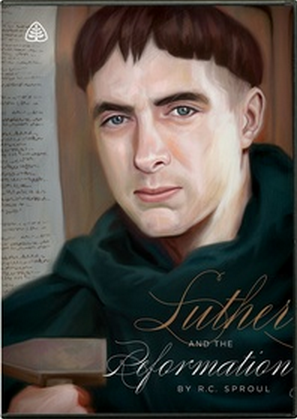
In celebration of this great day, my good friends at Ligonier Ministries are offering a free download of their 10 message teaching series called ‘Luther and the Reformation’.  This is a great series, and will help you learn not only about the Reformation, but about the man who was instrumental in bringing it about – and the God who worked through him to do so!

Also – the Gospel Coalition have posted ‘9 things you should know about Halloween and Reformation Day’.  Check it out!

Why Read the Old Testament?

In the coming days, a group of people in my church and friends from around the country will be starting to read through the Old Testament together again, and it’s sure to be a very interesting and encouraging experience.

But why would you want to do this?  Why take all that time to listen to, or read through the OT texts? Isn’t it good enough to be reading the New Testament in our devotions? The short answer is, as you might guess, “No!”  This isn’t about meeting a quota, or doing what is “good enough”, that’s certainly NOT the point. But what IS the point? Here are a few good reasons why you should consider reading the Old Testament devotionally every day…

First, the OT gives us the context for the New Testament (NT). We can understand the redemptive nature of NT history better if we know the history leading up to Christ’s incarnation and earthly ministry. As we get a sense for the context in which Christ came, we grow to appreciate God’s control over history even more.  Unlike most eastern thought, Christians believe that history is linear – God is driving toward a point.

David Murray puts it this way, “Many history books simply relate the what, when, where, and how of each event. Not many attempt to answer the “Why?” question, and those that do usually prove laughably unreliable. In contrast, biblical history has a clear purpose: it is a progressive revelation of the mind and heart of God for the benefit of needy sinners. God is the subject and the hero of the Bible.”

Second, once we become familiar with the OT, we begin to see how Christ is the fulfillment of types and shadows, and the epicenter of redemptive history and the story of humanity. Our story is really HIS story.  Seeing typology fulfilled in Christ only comes when you have studied and read the OT.

Sam Storms says, “In most cases the Old Testament type finds a deeper realization or expression in some aspect of the life of Jesus, his redemptive work, his judgments, or in his future return and reign. The correspondence is based on the premise that god controls history.”

Finally, but not by any means “lastly”, as Christians we believe that ALL Scripture is profitable for renewing our minds. Paul reminds Timothy of this, “All Scripture is breathed out by God and profitable for teaching, for reproof, for correction, and for training in righteousness, that the man of God may be complete, equipped for every good work” (2 Timothy 3:16-17).

This means that as we read the Old Testament, the words of God are literally renewing our minds, and changing our hearts.  They are equipping us to serve and enjoy God better, because we can help others understand the Scriptures more clearly, and we can appreciate and love God for all that He is and has done as our context is widened.

In conclusion, there are so many reasons to read the whole Bible, and I’ve just scratched the surface here, but needless to say, it is a very profitable exercise, and if you’d like to join a reading group and get to know the OT a little better, feel free to send me a message!

Having Peace from God

I was meditating on Psalm 145 this morning, and found it to be of great comfort.  As I took a step back, I realized that the reason it is so comforting is because it explains the character of God so well.

Interestingly, if you look at all the self-help books out on the market today you will find no shortage of ideas for how to practically change this or that part of your life – even in the midst of a struggle or depression – all in order to achieve some measure of peace. Yet in Scripture we’re told that in order for the Christian to have a peaceful mind we must spend more time meditating on who God is, and less time on making a list of things we ought to do.

For David says:

On the glorious splendor of your majesty,
and on your wondrous works, I will meditate.
 

Certainly I am not opposed to lists (I am a habitual list maker, and proud of it!), but I think there is an overarching principle here: the more we think on who God is, the more we realize that instead of doing we need to be resting. Meditating on His character brings us to realize that He is powerful to save, provide, and shelter us in the storm. We are told of His goodness and His righteousness. He is just and yet He is love. This is a beautiful tension there that is not resolved – He is both just and merciful, righteous and kind and so on. David says:

The Lord is righteous in all his ways
and kind in all his works.
 

These truths cause us to wonder in awe of who He is, and bring blessing and peace to His children. Theologian Bruce Ware comments, “But these qualities, as amazing as they are, are reserved for those who truly seek and trust him and love him. God is near to those ‘who call on him’ (vs. 18), he fulfills the desire of those ‘who fear him’ (i.e. give him proper regard; vs. 19), he preserves all those ‘who love him’ (vs. 20).”

So God’s goodness is for those who are His own:

The Lord upholds all who are falling
and raises up all who are bowed down.
The eyes of all look to you,
and you give them their food in due season.
You open your hand;
you satisfy the desire of every living thing.
The Lord is near to all who call on him,
to all who call on him in truth.
He fulfills the desire of those who fear him;
he also hears their cry and saves them.
The Lord preserves all who love him,
but all the wicked he will destroy. 
 

These truths bring us peace, because the more we meditate upon the character of God, the more we realize that He will take care of us in every valley – indeed He is with us in every valley. The peace He gives is unlike the peace the world offers – it is far deeper and more satisfying.

However, in order to have this satisfaction and enjoy this peace, we must first be reconciled to God.  We achieve peace in life by first achieving peace with God.  We do this only by believing in the Lord Jesus Christ, the perfect Son of God, the only One capable of imparting peace to our weary souls.  Believing in Him, trusting Him, casting all your life’s cares upon Him is the only way to everlasting peace.

Once you are at peace with God, a river of peace will flow from you and all the promises of God in Christ will be yours.  This is what Christ promises:

Peace I leave with you; my peace I give to you. Not as the world gives do I give to you. Let not your hearts be troubled, neither let them be afraid. (John 14:27)

I have said these things to you, that in me you may have peace. In the world you will have tribulation. But take heart; I have overcome the world.” (John 16:33)

If you need peace in your life, first you must have peace with God. I pray that you will be encouraged today to cast your cares upon Him. He is able to bear them all.

A Summary of the Good News

I was reading Herman Bavinck’s ‘The Divine and Human Nature of Christ’ this morning, and was struck by how the author starts out his book with such clarity about the Gospel of Jesus Christ. Even though he is setting out to address a topic which serves as a sub-set of the entire narrative of the Gospel, he still understands the necessity to beginning with the gospel.

I hope you enjoy these few paragraphs as much as I did!

The testimony which, according to Scripture, Christ has given of Himself is developed and confirmed by the preaching of the apostles. The confession that a man, named Jesus, is the Christ, the Only-Begotten of the Father, is in such direct conflict with our experience and with all of our thinking, and especially with all the inclinations of our heart, that no one can honestly and with his whole soul appropriate it without the persuasive activity of the Holy Spirit. By nature everybody stands in enmity to this confession, for it is not a confession natural to man. No one can confess that Jesus is the Lord except through the Holy Spirit, but neither can anyone speaking by the Holy Spirit call Jesus accursed; he must recognize Him as his Savior and King, (1 Cor. 12:3).

Hence when Christ appears on earth and Himself confesses that He is the Son of God, He did not leave it at that, but He also had a care, and He continues to have a care, that this confession finds entrance into the world, and is believed by the church. He called His apostles, and He instructed them, and made them witnesses to His words and deeds, to His death and resurrection. He gave them the Holy Spirit who brought them personally to the confession that Jesus was the Christ, the Son of the living God, (Matt. 16:16), and who later caused them, from the day of Pentecost on, to minister as preachers of those things which their eyes had seen, and they beheld, and their hands had handled of the Word of life, (1 John 1:1). The apostles were really not the real witnesses. The Spirit of truth, proceeding from the Father, is the original, infallible, and almighty witness to Christ, and the apostles are that only in Him and through Him, (John 15:26; Acts 5:32). And it is that same Spirit of truth who by means of the testimony of the apostles brings the church of all ages to the confession and preserves them in it: Lord, to whom shall we go? Thou hast the words of eternal life. And we believe and are sure that Thou art the Christ, the Son of the living God, (John 6:68-69).

5 Dangers to Avoid in Parenting

This past Monday the folks at Ligonier had a post from Robert Boekestein on 5 traps that parents can fall into while parenting. I thought a few of these were particularly helpful so I wanted to repost the blog below.  You can find the original here.  I hope this is an encouragement to you all!

5 Dangers to Avoid in Parenting

Posted: 08 Jul 2013 03:00 AM PDT


“Fathers, do not provoke your children, lest they become discouraged.” (Colossians 3:21)

It is tempting to blame children for our family problems. But Scripture does not allow us to do this. Children bear the responsibility to obey their parents. But God commands parents to raise their children with godly nurture, being careful not to frustrate them. Inestimable damage is done by parents who provoke their children, and cause them to become discouraged.

While specifically addressing fathers in Colossians 3:21, God is speaking to both parents. The word translated, “fathers” is elsewhere used to mean “parents” (Heb. 11:23). Additionally, fathers are spoken to as covenant heads of the families. Fathers are to see that neither parent provokes the children. Fathers cannot stand idly by if their children are being provoked by their mothers.

What Does it Mean to Provoke?

The word used in Colossians 3:21 means to agitate, often to anger. Matthew Henry explains that parents provoke their children by treating them with rigor and severity, by holding the reigns too tightly and thereby raising their passions, discouraging them in their duty.

Years ago I was invited to participate in a long and strenuous horse ride. Due to fear and inexperience I held the reigns so tightly that the bit began to agitate the horse’s mouth. Before long the horse grew restless and threatened to throw me. I was provoking him to anger by holding the reigns too tightly. He was willing to be directed. But I was undermining his willingness by my heavy hand.

In Ephesians 6:4 Paul contrasts two approaches to parenting. On the one hand parents can provoke their children to wrath. On the other, parents can bring up the children in the training and admonition of the Lord. Failing to patiently, and constructively train our children in the things of God, we often substitute more fleshly methods of parenting which provoke our children’s anger.

What Is Discouragement?

The word literally means to lose energy or passion. Discouraged children lose hope, stop trying, and give up. When children say, “I don’t care” or “It doesn’t matter,” they are often conveying discouragement. It is tempting to dismiss a dispirited child’s behavior as being teenager-ish or childish. But parents must resist assuming that their child’s indifference is normal. In fact, there are hosts of young people who are passionate about life and enthusiastic in godliness. But sometimes this passion is squelched by parental provocation.

5 Dangers to Avoid

1. Mishandling the Rod of Discipline

Surely the Rod can be used too little. “He who spares his rod hates his child…” (Prov. 13:24). Children need to be taught that sin hurts. If they don’t, they may lose interest in pursuing godliness because they don’t see the danger of sin.

But the rod can also be used too much. The Apocrypha says: “He who loves his son will whip him often… bow down his neck in his youth, and beat his sides while he is young” (Ecclus. 30:1,12). This is not Christian discipline. Sometimes a wise rebuke is better than the rod (Prov. 17:10). This is particularly so as a child moves past the early years of childhood. Matthew Henry urges parents to exercise authority not “with rigor and severity, but with kindness and gentleness.” If your children can forget that you love them, either during or immediately following discipline, you might be doing it wrong.

2. Maintaining a Disorderly Home

God is a God of order (1 Cor. 14:33). He has created us in his image to promote order and thrive in the context of order. A disorderly home can discourage children. A perpetually messy, or especially an unsanitary home can help produce poorly adjusted children. A lack of regularly scheduled meal times and bed times can frustrate children’s God-given desire for order.

3. Holding Inappropriate Expectations

Some parents expect almost nothing from their kids. In such settings, children can lose energy or passion because they are never helped to “reach forward to those things which are ahead” (Phil 3:13). In other homes too much is expected. Experience teaches that unreasonable expectations are the ideal breeding ground for discouragement. If your children regularly fail to measure up to your standards, you might be expecting too much.

4. Building a Joyless Home

In some homes children are not treated with the dignity that God requires. Some parents rarely congratulate or encourage their children, focusing instead, on their faults. Parents must never forget that their children are people created in God’s image. Children of believers are even included in God’s covenant (1 Cor. 7:14).

5. Failing to Speak as “One Flesh”

Too often, dad and mom are not operating by the same rules when it comes to interacting with their kids. One parent might be more lenient. The other might be more demanding. But such “accidental doublespeak” is dangerously confusing to our children. In irreconcilable disagreements the wife must graciously acquiesce to her husband’s leadership (Col. 3:18).

There are many more potential causes for childhood discouragement. Like good physicians, parents should evaluate the spiritual health of their children and, where applicable, diagnose the source of their children’s discouragement. Sometimes the answer will be found by looking in the mirror.