Christ our Supreme Prophet

Last night I had the privilege of preaching on the role of Christ as our Prophet.  The next few weeks I’ll be preaching on his priesthood and kingship.  Here are the notes from that lesson.  Note: I’ve also included some Appendices which were more for my benefit, but also help provide context and more background on a few of the sections (should you make it that far!).

Soli Deo Gloria!

PJW

Christ the Supreme Prophet

He Preaches a Gospel of Liberation and then Fulfills the Office of Deliverer

December 1, 2013

It is the very beginning of advent season.  A time in which we excitedly anticipate Christmas – just as the Israelites anticipated the coming of the Messiah.

In His coming, Jesus would grow up to fulfill hundreds of prophecies and predictions and accomplish what no other man had ever accomplished.  In so doing He would fill three key offices: that of a prophet, a priest and a king.

Tonight we will examine the first of these, and see what Jesus’ role as prophet entailed, and what it is that He did to fulfill this role in His life and ministry. The text for this evening comes from Luke 4:16-21.

Luke makes two important points in this passage that we need to examine this evening.

  1. First, Jesus Christ is our Supreme Prophet, and His message is a gospel of liberation.
  1. Second, Jesus not only proclaims liberation, He also liberates. He is Daniel’s promised deliverer and covenant maker and ushers in a great antitypical jubilee.

What is a Prophet?

Now, before we go too much further, let me ask an obvious question: What is a prophet?  The answer is that, in short, a prophet is someone (in the Bible) who speaks on God’s behalf to God’s people.  Whereas a priest speaks to God on behalf of God’s people. 

Theologian Geerhardus Vos put it this way; “(a priest’s) function differs from that of a prophet in that the prophet moves from God toward man, whereas the priest moves from man toward God.”[i]

In the Old Testament, the office of a prophet was not a popular one.  God’s people had killed many of the prophets that He sent (Acts 7:51-52). And, I suppose in this way you could say Jesus was no different than the others!

However, what makes Jesus God’s supreme prophet is His proclamation of most important message God had ever sent His people: the Gospel of salvation.

It is this proclamation of Christ’s to which we now turn…

Exegesis of Luke 4:16-21

4:16 And he came to Nazareth, where he had been brought up. And as was his custom, he went to the synagogue on the Sabbath day, and he stood up to read.

Historical Foreground

Jesus has been preaching in the surrounding region, and his fame was beginning to build.  Now it was time to come home for His first appearance at the synagogue in Nazareth where He grew up since the start of His ministry.  It was a homecoming for Him of sorts.

The people were no doubt anxious to hear Jesus speak. Here was one of their own who had been gathering popularity throughout the region, and they were no doubt poised to accept Him.  But were they ready to accept His message?

20th Century South African theologian and pastor Norval Geldenhuys says, “It was customary to give such an opportunity in the synagogue to visiting rabbis; and especially as all were curious to hear Jesus.”

As Jesus came into the synagogue, we are told that He “stood up to read.” The practice of the day was to stand up to read the word of God, this was done out of respect. Once the reading was done, the rabbi would sit down and give a sermon.  The sermons of that day were not like they are today, they focused almost exclusively on instruction, rather than a public oration or preaching style (see Geldenhuys).

NOTE: John MacArthur and Darrel Block both give some time to the order of ceremony in a Synagogue (see Appendix 3 for more info on Synagogues) and it was something like this:

  1. Thanksgiving or “blessings” spoken in connection with the Shema
  2. Prayer, with response of “amen” by the congregation
  3. Reading a passage from the Pentateuch (in Hebrew followed by a translation into Aramaic cf. MacArthur/Block)
  4. Reading of a passage from the Prophets (called the “Haftarah” cf. Block)
  5. Sermon or word of exhortation – by any qualified male (so long as 10 males were present per Block)
  6. Benediction by the priest (if there was one present) to which the congregation responded with “Amen” and then a closing prayer.


4:17 And the scroll of the prophet Isaiah was given to him. He unrolled the scroll and found the place where it was written,

Jesus Fulfills the Predicted Role

Jesus is the fulfillment of the OT longing for a new and greater prophet.  And therefore it would be appropriate for Him to show from the prophets of old who He was.

But this passage isn’t the only one which pointed to his arrival.  There are other foundational passages that speak of a prophet that would arise who was greater than Moses, two of which are really important and we’ll look at now:

First, in Deuteronomy 18 Moses wrote the key passage that most Jews thought of when they thought about “the prophet” that would arise in his stead:

“The LORD your God will raise up for you a prophet like me from among you, from your brothers—it is to him you shall listen—[16] just as you desired of the LORD your God at Horeb on the day of the assembly, when you said, ‘Let me not hear again the voice of the LORD my God or see this great fire any more, lest I die.’ [17] And the LORD said to me, ‘They are right in what they have spoken. [18] I will raise up for them a prophet like you from among their brothers. And I will put my words in his mouth, and he shall speak to them all that I command him.  (Deuteronomy 18:15-18)

Second, we see in the New Testament that Peter confirms that it was Jesus who fulfilled this prophetic role.  In his sermon in Acts 3 in the Portico of Solomon, Peter says this:

Moses said, ‘The Lord God will raise up for you a prophet like me from your brothers. You shall listen to him in whatever he tells you. [23] And it shall be that every soul who does not listen to that prophet shall be destroyed from the people.’ [24] And all the prophets who have spoken, from Samuel and those who came after him, also proclaimed these days. [25] You are the sons of the prophets and of the covenant that God made with your fathers, saying to Abraham, ‘And in your offspring shall all the families of the earth be blessed.’ [26] God, having raised up his servant, sent him to you first, to bless you by turning every one of you from your wickedness.” (Acts 3:22-26)

This prophet was Jesus Christ, and He was raised up to proclaim the gospel of repentance and “turning every one from…wickedness” in order that they would be “blessed.”

And so we see that this long-anticipated prophet has come, and the Apostles clearly believed that this role was fulfilled in the life and ministry of Jesus Christ.

4:18a  The Spirit of the Lord is upon me,
 because he has anointed me

The Holy Spirit in Christ’s Ministry

Now, let’s look at verse 18.  As Jesus opens the scroll He begins reading from the book of Isaiah – in what we would know today as chapter 61 verses 1 and 2 (though demarcations of this kind didn’t come for many hundred years later).

First and foremost we see that the Christ is one who has been “anointed by the Holy Spirit.”  This, as you recall, happened at the baptism of Jesus where John had been baptizing people and calling them to repentance.  Jesus, who would fulfill all the law perfectly, also went to be baptized.

Then Jesus came from Galilee to the Jordan to John, to be baptized by him. [14] John would have prevented him, saying, “I need to be baptized by you, and do you come to me?” [15] But Jesus answered him, “Let it be so now, for thus it is fitting for us to fulfill all righteousness.” Then he consented. [16] And when Jesus was baptized, immediately he went up from the water, and behold, the heavens were opened to him, and he saw the Spirit of God descending like a dove and coming to rest on him; [17] and behold, a voice from heaven said, “This is my beloved Son, with whom I am well pleased.” (Matthew 3:13-17 ESV)

Everything that Jesus did was done being “filled with the Spirit.”  In fact, just prior to opening the scroll of Isaiah, in the passage before us today, it says, “And Jesus returned in the power of the Spirit to Galilee, and a report about him went out through all the surrounding country”  (Luke 4:14).

In fact Jesus Himself said that His work in the power of the Spirit (Acts 10:38) was evidence of the fact that the kingdom of God had been ushered in:

And if I cast out demons by Beelzebul, by whom do your sons cast them out? Therefore they will be your judges. But if it is by the Spirit of God that I cast out demons, then the kingdom of God has come upon you. (Matt. 12:27-28)

I think we sometimes undervalue or misunderstand the work of the Spirit in the life and ministry of Christ. For instance, how could He be said to “grow in grace and knowledge” when He was already omniscient?  How could Jesus make it all the way to the cross in his humanity without sinning?  Well it wasn’t because the divine nature somehow reached over and controlled the human nature.  Rather, He fully submitted to the Spirit, and the Spirit imparted wisdom from the Father.  The Divine and the Human in Him did not “mix” or get lost somehow. Each was distinct, and we understand that union as communicating back and forth with each other.  And it is the Spirit who, somehow mysteriously, played a major part in this.

Geerhardus Vos explains: “Our Lord needed the Spirit as a real equipment of his human nature for the execution of his Messianic task. Jesus ascribed all his power and grace, the gracious words, the saving acts, to the possession of the Spirit (Matt. 12:28; Luke 4:18; Acts 10:36-38). And, through qualifying him in this manner for achieving his messianic task, the Spirit laid the foundation for the great Pentecostal bestowal of the Spirit afterwards, for this gift was dependent on the finished work.”

In His life and ministry Jesus submitted to the Spirit, but it is also important to recognize that the Spirit’s mission not to glorify Himself, but to shine the light of glory on Christ.  As Bruce Ware says, “All Scripture is given to us by the Spirit. And what the Spirit wants to talk about, most centrally, is Jesus!”

Therefore, Jesus is anointed with the Spirit, and in this way not only does He fulfill the prophecy of Isaiah, but he also is empowered to proclaim the gospel. “The Spirit , then, does not work in an independent saving manner apart from the proclamation of the gospel of Jesus Christ, for it is only by the knowledge of this gospel that an can be saved” (Ware).

4:18b  to proclaim good news to the poor.
He has sent me to proclaim liberty to the captives
and recovering of sight to the blind,
to set at liberty those who are oppressed,

Messianic/Eschatological Overtones

Here we get to the heart of Isaiah’s message, and the mission of the one who was “anointed” by the Lord.

When the Jews heard Jesus quote this passage their minds would likely have been awash in ideas of a dawning age of God’s salvation. Isaiah 61 brought to the Jewish mind of the time the promise of prosperity and a golden age of peace and blessing from God.  For them it had heavy eschatological/messianic overtones (cf. Block). We have a similar excitement and anticipation as we wait for the return of Christ (cf. Rev. 21).

When Jesus read this and connected it with himself, the Jews would have understood that He was saying that He was ushering in a new age of salvation – no doubt leading them to wonder if He was the long awaited Messiah.

So picture yourself in the room at that moment as a first century Jew listening to this man Jesus – who you might have known growing up – read words from Isaiah 61 that bring to your mind thoughts and emotions connected with the coming of God’s Savior.  Jesus hasn’t said anything yet, but dreams of peace and prosperity immediately fill your mind as you look down at your callused hands, and feel the empty money bag on your hip.  You might cringe a bit as you remember recent killings or abuses by the Romans.  Your heart might doubt if there will ever be a savior for Israel; but this Jesus has spoken things with authority you’ve never heard before.  And now He’s reading Isaiah 61…

So What Does This Really Mean?

Let’s look closer at the text itself. First, the “good news” that is proclaimed is the gospel, which is continued on the next line.  The good news is that Jesus has come to free people from bondage, heal those who are sick, and give sight to the blind etc. Jesus in the Sermon on the Mount that, “blessed are the poor in spirit for theirs is the kingdom of heaven.”

The second part of this message is that Jesus came to free captives.  Well, what kind of captives?  I believe that Jesus came to show that the prison He was freeing His people from was a prison of sin and death.  The Apostle Paul helps us understand example what was really meant by this when he says:

But thanks be to God, that you who were once slaves of sin have become obedient from the heart to the standard of teaching to which you were committed, and, having been set free from sin, have become slaves of righteousness (Romans 6:17-18).

Listen to the words of our Lord when He would later explain this in more detail:

So Jesus said to the Jews who had believed him, “If you abide in my word, you are truly my disciples, [32] and you will know the truth, and the truth will set you free.” [33] They answered him, “We are offspring of Abraham and have never been enslaved to anyone. How is it that you say, ‘You will become free’?” [34] Jesus answered them, “Truly, truly, I say to you, everyone who practices sin is a slave to sin. [35] The slave does not remain in the house forever; the son remains forever. [36] So if the Son sets you free, you will be free indeed. [37] I know that you are offspring of Abraham; yet you seek to kill me because my word finds no place in you. [38] I speak of what I have seen with my Father, and you do what you have heard from your father.” (John 8:31-38)

But how is He going to set the captives free?  Through His sacrificial death, burial, and resurrection, and His triumph over the grave. He paid the penalty for the sins that had for so long held His people in bondage.

The second and fourth lines are similar because when spoken from the lips of Jesus they tell us that He came to proclaim His own death: I have come to do more than set you free from earthly bondage, I have come to set you free from the oppression of spiritual bondage.

Lastly, the third line says that He will give site to the blind. The sight that He gave was not only physical – for Jesus healed multitudes of people during his ministry – but most importantly spiritual.  In fact, the healing of blind men and women during his ministry actually pointed to a greater healing of their spiritual site. For the God of this world had blinded the minds of those who didn’t believe, and as Jesus told Nicodemus, “Truly, truly, I say to you, unless one is born again he cannot see the kingdom of God” (John 3:3).

Geldenhuys says, “God had sent Him to heal those who were broken-hearted and found themselves in spiritual distress; to proclaim deliverance to those who were captives in the power of sin and in spiritual wretchedness; to give back to the spiritually blind the power of sight; to cause those who were downcast and inwardly bruised to go forward in triumph.”

The physical promises and physical work of Jesus in his healing ministry – like many of those in the Old Testament – pointed to something greater.  Just as the promise of land in the OT pointed to our becoming a new creation in Christ, and the eventuality of a renewed heavens and earth, so too the miracles of Christ pointed to His ultimate work of spiritual redemption which began during His ministry here on earth and will be consummated one day when He returns.

Therefore the “good news” is this: that Jesus will heal your brokenness, will breathe new life into your spiritually dead soul, and will raise you to walk in newness of life. He is the Messiah, He is the anointed One, and He has come to usher in the kingdom of God in power – a kingdom where the blind see, and the poor have been made rich in the riches that only God can give.

Praise God that He sent a Savior to set us free from our bondage to sin! Not by our own efforts or will, but by the powerful work of the Lord Jesus Christ.

4:19 to proclaim the year of the Lord’s favor.”

Jesus is the Fulfillment of the Year of Jubilee

Finally, let us examine the last part of this passage.  There are a few key points to be made, and the last one we will examine in-depth.

First, it tells us something about the nature of Jesus’ mission during His first advent. Baptist Theologian Tom Schreiner notes that when Jesus quotes the passage from Isaiah, He notably skips past the whole part on judgment. The rest of 61:2 says, “to proclaim the year of the Lord’s favor, and the day of vengeance of our God; to comfort all who mourn.”

Perhaps what this tells us is that during Jesus’ first advent He has come to usher in his kingdom, to proclaim the gospel, and the fulfillment of the year of Jubilee.  But when He returns, He will judge both the quick and the dead.  Jesus is telling us something about his mission here on earth during the first advent – it is a mission of salvation – he came to seek and save the lost.

Secondly, this statement used in this context is Jesus’ way of ending the gospel message he’s just proclaimed with an exclamation point.  This gospel message he’s just proclaimed is so magnificent that marks the beginning of a new age of redemption.

And it is Jesus who is at the epicenter of this new redemptive age. He is the fulfillment of the (“typological”) past, and is the redeemer of all mankind. It is the announcement of the kingdom of God (His kingdom) and the Messianic age. Geldenhuys says, “It amounted to a declaration by Him that the words which He had read to them had finally come to fulfillment – in His own person…thus to ‘proclaim the acceptable year of the Lord’, i.e. to announce the Messianic age – the period ushered in by His appearance, in which God will grant His salvation to His people.”

The phrase “year of favor” is Isaiah’s way of referencing the Jewish celebration of Jubilee. We find this celebration first described by Moses in Leviticus 25 (8-12):

“You shall count seven weeks of years, seven times seven years, so that the time of the seven weeks of years shall give you forty-nine years. 9 Then you shall sound the loud trumpet on the tenth day of the seventh month. On the Day of Atonement you shall sound the trumpet throughout all your land. 10 And you shall consecrate the fiftieth year, and proclaim liberty throughout the land to all its inhabitants. It shall be a jubilee for you, when each of you shall return to his property and each of you shall return to his clan. 11 That fiftieth year shall be a jubilee for you; in it you shall neither sow nor reap what grows of itself nor gather the grapes from the undressed vines. 12 For it is a jubilee. It shall be holy to you. You may eat the produce of the field.

The rest of the chapter is devoted to all of the stipulations that Israel was to keep in this year. Here are the basics (summarized by Sam Storms):

  1. The return of all property, according to the original Mosaic distribution, to the original owner or to his family
  2. The release of all Jewish slaves
  3. The cancellation of debts
  4. The land is to lie fallow, i.e., it is neither to be sown, pruned reaped, nor gathered for an entire year.

The year of Jubilee ensured that the poor and needy were taken care of and the land was properly looked after and not overworked.  It also emphasized that it was God who owned the land (vs. 23), and that (like us today) they were sojourners in the land. Lastly, it laid down rules for redemption.  “If a person gets into difficulty or danger, then a relative (his “nearest redeemer,” v. 25) is to redeem him from his dire straits” (ESV Study notes) – A principle we find especially prominent in the book of Ruth, and in later on in our Lord and Savior’s redemption of us.

If the people of Israel kept these laws, then God promised that He would bless them greatly and they would “dwell in the land securely” (vs. 19)

So Isaiah is saying that when the prophet comes He will bring in a time of great jubilee. Sam Storms helps us understand the importance of how the Jewish people viewed the year of Jubilee:

The jubilee, therefore, was a year in which social justice, equity, freedom, pardon, release, and restoration were emphasized and experienced. The jubilee signaled a new beginning, the inauguration of moral, spiritual, and national renewal. Hence it is no surprise that the jubilee became a symbol and prefigurement of the ultimate redemption, release, and restoration that God would accomplish spiritually on behalf of his people.

Now, eventually, the anticipation of a coming deliverer (like Moses) and prince who would make a strong new covenant with His people, would soon be made known to a prophet living among the Babylonians.  That man was Daniel.

Let us turn to Daniel 9, and beginning in verse 24 we’ll read through the end of the chapter. This section of Scripture is important because it was Daniel who was told by the angel Gabriel to expect a coming Messiah who would fulfill these prophecies from Isaiah 61, and usher in a time of great deliverance and redemption:

“Seventy weeks are decreed about your people and your holy city, to finish the transgression, to put an end to sin, and to atone for iniquity, to bring in everlasting righteousness, to seal both vision and prophet, and to anoint a most holy place. Know therefore and understand that from the going out of the word to restore and build Jerusalem to the coming of an anointed one, a prince, there shall be seven weeks.

Then for sixty-two weeks it shall be built again with squares and moat, but in a troubled time. And after the sixty-two weeks, an anointed one shall be cut off and shall have nothing. And the people of the prince who is to come shall destroy the city and the sanctuary. Its end shall come with a flood, and to the end there shall be war. Desolations are decreed.

And he shall make a strong covenant with many for one week, and for half of the week he shall put an end to sacrifice and offering. And on the wing of abominations shall come one who makes desolate, until the decreed end is poured out on the desolator.” (Daniel 9:24-27, ESV)

You may know this already, but Daniel’s 70-week prophecy anticipates two things: deliverance from the captivity of Babylon, and from the captivity of their sin. And that is the “good news” that Jesus has just declared. Daniel himself prays specifically for the former, but when God sends Gabriel to announce the vision we find that God has a bigger plan in mind. The deliverance from captivity in Bablyon would, like that of Egypt hundreds of years before, only symbolize the great deliverance of His people from sin and death.

That is why we have the 70 weeks.  Each week represents 7 years, and from the time of the decree of Artaxerxes in 457 B.C. to beginning of Christ’s ministry is 49 weeks.  The final week would land between 29-34 A.D. (per Gentry).

***Where the exact dates land isn’t as important as the theological idea that is being conveyed to Daniel here (cf. Storms), namely that Jesus is said to be “cut-off” for His people to die a vicarious substitutionary death for you and for me.[ii]

“This (the year of Jubilee mentioned in Lev. 25) all takes on special significance when we realize that there is decreed for Israel a total period of seventy sevens of years or 490 years, which is to say 10 JUBILEE ERAS, ‘an intensification of the jubilee concept point to the ultimate, antitypical jubilee.’ The jubilary year of God which the consummation of redemption and restoration is to occur is described in Isaiah 61:1-2” (Storms).

In Summary…

“When Jesus declares that in himself the jubilee of God has come he is saying, in effect, that the seventy weeks of Daniels have reached their climax. The new age of jubilee, of which all previous jubilees were prefigurements, has now dawned in the person and ministry of Jesus. The goal of the seventy-weeks prophecy is the consummate jubilary salvation of God!” (Storms)

Jesus was the man spoken of here. He is the “anointed one” and He is the one who makes a “Strong covenant” with the people and He is the one who puts “and end to sacrifice and offering” because He Himself was our sacrifice.

4:20-21 And he rolled up the scroll and gave it back to the attendant and sat down. And the eyes of all in the synagogue were fixed on him. 21 And he began to say to them, “Today this Scripture has been fulfilled in your hearing.”

In Conclusion 

When Jesus rolls up that scroll, and hands it to the attendant, He then turns to the whole room declaring that they will witness the in-breaking of the kingdom of God!  It’s as if He just handed the scroll aside and declared, “That. Just. Happened.”  BOOM!

It rocks every listener to the core – and it ought to shake us up as well.

Jesus, sitting in the role of the prophet of God (the Supreme Prophet) is declaring that HE is the one whom the former prophets anxiously awaited.

He is God’s Supreme Prophet to the world and is declaring the end of captivity for those held in the bonds of sin, to the Jew first, and also to the Gentile. This is the Gospel of Christ. The captivity in Babylon, and in Egypt prior, were types and shadows of the captivity of sin and death that held us in bondage until He came.

Jesus is the one who has come to free the captives. He is the one who will be ushering in a kingdom and age of grace.  Furthermore, it is HE who is most worthy to be celebrated!  “I am here to fulfill the year of jubilee, and usher in the year of the Lord’s favor!”

He is the Message and the Messenger. He is the Word and the Prophet.  You see, a prophet of yesteryear could declare a message of liberty, but couldn’t bring it to pass. It took a deliverer to bring that message of liberty to the people. Jesus is both deliverer and message bearer. 

That is why He is the Supreme Prophet – He is an effectual Prophet who declares liberty (the gospel) and then proceeds to deliver (and usher in an age of liberty for millions of His chosen ones).

Christ has come to fulfill the entire law.  It is kept in His life of righteous obedience, and His sacrificial death on our behalf. His life and death mark the fulfillment of Daniel’s prophecy. He has come to make a new covenant with us, to put an end to sacrifice and offering (for He is the fulfillment of the Temple), to release us from our captivity to sin, and to proclaim the year of the Lord’s favor – peace in our hearts and a new creation in our lives.

Christmas Conclusion: We are on the precipice of celebrating the greatest birth in world history – the advent of God’s last and greatest Prophet.  We do it knowing that Jesus Himself is our great celebration – not simply because He was born, but because He came to SET US FREE.

Rightly did the prophets say of Him:
 
Sing for joy, O heavens, and exult, O earth;
break forth, O mountains, into singing!
For the Lord has comforted his people
and will have compassion on his afflicted. (Isaiah 49:13, ESV)


Closing Prayer


Appendix 1 – Reading the OT through the Lens of Christ’s Words

I think it would be wise of us to recognize that there are often times in Scripture when we read of Jesus saying something that we don’t understand.  This was certainly the case with those who heard Him preach and claim to be fulfilling OT prophecies. In fact, many times we look at the passages He is quoting and even we, who have the Holy Spirit dwelling inside us, do not immediately grasp the connection.  For instance I was recently reading in John 13 and came to verse 18 where Jesus says, “I am not speaking of all of you; I know whom I have chosen. But the Scripture will be fulfilled, ‘He who ate my bread has lifted his heel against me.’”  He’s quoting David here who said “Even my close friend in whom I trusted, who late my bread, has lifted his heel against me” (Ps. 41:9).

If I were to read the Psalms without having read John 13, as many of the Jews had prior to Christ, I would simply assume that David was talking about Saul.  And that assumption would probably be correct with the limited knowledge I had. But this is my point: As we read the words of Jesus, and what He has to say about Himself, we need to trust those words explicitly.

In his commentary on Hebrews, Phillip Hughes says well that, “…over and over again in the New Testament shows that passages in the Old Testament have a significance and an application beyond and in addition to the original occasion of their composition, and this is especially so with reference to the redemptive work of Christ.”

Therefore, we need to understand that our sovereign God has placed words in the mouths of the prophets that even they might not have fully understood.  In other words, God knew all the words the prophets would write, for their words were inspired by the Spirit of God, and He had a plan for those words that may have been fulfilled both in their time, and in the coming of His Son Jesus Christ.  

Appendix 2 – Daniel’s 70 Weeks

As I compiled this sermon, I found that there are many competing views of Daniel’s prophecy, even within the reformed tradition. I spent time dealing mostly with two prominent (and current) theologians, Baptist Theologian Peter Gentry and Baptist Theologian Sam Storms.

Peter Gentry has some helpful remarks on Daniel’s vision:

The vision of Daniel’s seventy weeks, then, can be explained simply. It refers to a period of seventy sabbaticals or periods of seven years required to bring in the ultimate jubilee: release from sin, the establishment of everlasting righteousness, and consecration of the Temple.  During the first seven sabbaticals the city of Jerusalem is restored. Then for sixty-two sabbaticals there is nothing to report. In the climatic seventieth week, Israel’s King arrives and dies vicariously for his people.  Strangely, desecration of the temple similar to that by Antiochus Epiphanies in the Greek Empire is perpetrated by the Jewish people themselves, resulting in the destruction of Jerusalem. The events are fulfilled in the person of Jessus of Nazareth. He is the coming King. His crucifixion is the sacrifice to end all sacrifices and the basis of the New Covenant with man. His death is not “for himself”, but rather vicarious. The rejection of Jesus as Messiah and the desecration of Him as the true Temple at his trial by the high priest result in judgment upon the Herodian temple, carried out eventually in 70A.D. The notion of a gap between the 69th and 70th week is contrary to a vision of chronological sequence. The prophecy is remarkable for its precision as it fits the events concerning Jesus of Nazareth.”

But Sam Storms, who has read Gentry, agrees that we have to read Daniel’s seventy weeks in terms of Sabbaticals (theologically instead of chronologically). Still, he has a different (and very helpful) take on this:

My point is that if Jeremiah’s “seventy years” turn out to be only “sixty-six” or even “fifty-eight” we should not be overly concerned that Daniel’s “seventy-sevens” end up being something other than precisely 490 years.”

This is different from Gentry who has done some gymnastics to show that the exact year of Christ’s dying on the cross is likely halfway through the final week of the 70 sabbaticals. But even Gentry seems to realize there is some ambiguity as to the exact year of Christ’s death.  Therefore, it is impossible to know for sure whether He died halfway through the week, or at the beginning of it, or near the end etc. from the historical record we have.

But Storms and Gentry both agree overall that this passage in Daniel is closely related to our passage in Luke.  As Storms says, “This is the passage that our Lord quotes in Luke 4:16-21 and applies to his own person and work. In other words, the fulfillment and anti-type of the prophetic and typical jubilary year has come in the person and work of Jesus Christ! Thus both Isaiah and Luke employ the Mosaic instruction (he had quoted from Leviticus 25 on the year of Jubilee before this) concerning the jubilee to describe the dawning of God’s kingdom in the person and work of Jesus.”

Bryan Chapell (of the Gospel Coalition) also summarizes the passage well, “Daniel’s vision I, unquestionably, ultimately about Christ’s gracious work in behalf of his people…Jerusalem and the temple will be restored, followed by a time of trouble, culminating in the appearance of the Messiah, who himself will be cut off before Jerusalem and its sanctuary are destroyed. These details align with Cyrus’ release of the captives, Jerusalem’s rebuilding, Christ’s coming, his crucifixion, and the subsequent destruction of Jerusalem by the future Roman emperor Titus in 10 A.D.”

Gentry’s overview of Daniel’s prayer sounds like this: Daniels’s prayer is focused upon the physical return from Babylon – the first stage in redemption, but the angelic message and vision of the seventy weeks is focused upon the forgiveness of sins and the renewal of covenant and righteousness – the second stage in return from exile.

Appendix 3 – The Advent of Synagogues

John MacArthur has a fascinating short history of how synagogues came about in his commentary on the first five chapters of Luke’s Gospel. The rudimentary basics are that they could be established if there were at least 10 men in a village (this is something we saw during a study on the book of Acts – if there were not that many men in the town or village, as could be the case in the diaspora, then people would gather by the river if the town had one).

These meeting groups cropped up around the time of the Babylonian Captivity because the temple had been destroyed and there was no one central location of worship and sacrifice.  I’m not entirely sure where or if they even did sacrificing during that time.

The structures were made of stone, generally, and faced (or had windows that faced?) Jerusalem.

Appendix 4The Chiastic Structure of Luke 4:16b-4:20d (as outlined in Block)

the synagogue (4:16b)
  standing (4:16c)
     receiving the scripture (4:17a)
        opening the scripture (4:17b)
            preaching the good news (4:18c)
                  proclaiming release to the captive (4:18d)
                        giving sight to the blind (4:18e)
                  setting free the oppressed (4:18f)
            proclaiming acceptable year of the Lord (4:19a)
        closing the scripture (4:20a)
     returning the scripture (4:20b)
  sitting (4:20c)
the synagogue (4:20d) 
 

Appendix 5 – The Year of Jubilee

I liked and wanted to have in here the summary of the ESV Study notes on Leviticus 25 which state:

This provided a periodic restoration of the means to earn a living for each family in an agrarian society. (The jubilee did not equalize all possessions in Israel, however, since possessions such as cattle and money were not reallocated.) The prohibitions of the jubilee are the same as for the sabbatical year. The land is to lie fallow for two years in a row: the forty-ninth year (sabbatical year) and the fiftieth year (jubilee). This law prohibits the amassing of large estates, which would reduce many Israelites to tenant status on their ancestral land (cf. Isa. 5:8).

Also, I noted from the text that if an Israelite is forced to sell his land temporarily, he and his family retain the right of redemption. The land may be redeemed in one of three ways:

(1) a kinsman-redeemer buys back the land;
(2) the seller himself is able to buy it back; or
(3) it is restored to the rightful owner at the jubilee.
 
It is interesting that I have heard in the past that the people of Israel never celebrated the year of Jubilee! In other words, they were disobedient to the command they’d been given.  However, despite their disobedience, and eventual exile into the land of Babylon, God still had a great plan for His chosen people.

Now, I didn’t want to mention this in the sermon itself, mainly because I didn’t find any scholarship to back this up. I had heard it from the pulpit before (not sure where), but without hard evidence to support it, I couldn’t make it a major theme of the sermon.  Nonetheless, it is an interesting thought to consider.

Appendix 6 – The Kingdom of God in Luke 4

I didn’t spend a ton of time talking about the in-breaking of the kingdom in this passage, but some of the work of Baptist Theologian Tom Schreiner has been very helpful as I worked on the passage as a whole, and he has a little section on Luke 4 in his ‘New Testament Theology: Magnifying God in Christ’ which is worth reading.  Here are some of the most interesting points he makes about the passage in relationship to the in-breaking of the kingdom of God in the ministry of Christ:

Jesus began by citing the OT Scriptures and claiming that they reach fulfillment in his person and ministry. The claim is a stunning one, for the OT text refers to the fulfillment of God’s end-time promises. Jesus claimed that he is anointed with the eschatological Spirit (cf. Is. 44:3; Ez. 11:18-19; 36:26-27; Joel 2:28). The good news of the release from exile had now been realized through him. The year of the Lord’s favor and the liberty of God’s people had arrived. It does not appear here that Jesus merely states that these promises will be fulfilled at the consummation of all things. Even now, through his healing ministry, the blind were receiving sight. The gospel that he proclaimed means that the poor were hearing the glad tidings in the present. Indeed, Jesus skipped over the line in Is. 61 that speaks of the Lord’s vengeance and referred only to the time of his favor. This suggests that the present time is not a time of vengeance but the day of salvation. The day of vengeance was delayed and yet, surprisingly enough, the day of favor and salvation had dawned in the person and ministry of Jesus.

ENDNOTES

[i] Vos elsewhere says, “The Son’s unique greatness, his exaltation above man constitutes his chief qualification for the revealership. As a revealer he represents not man but God; therefore the nearer he stands to God the better he is qualified.” So the office of prophet was an office of revelation. And Jesus was the supreme agent of God’s revelation. The same was true of Jesus, who came with a supremely glorious message, yet it offended the people of Israel because it didn’t fit into their presuppositions.

[ii] As Isaiah says:

Thus says the Lord:
“In a time of favor I have answered you;
in a day of salvation I have helped you;
I will keep you and give you
as a covenant to the people,
to establish the land,
to apportion the desolate heritages,
saying to the prisoners, ‘Come out,’
to those who are in darkness, ‘Appear.’
They shall feed along the ways;
on all bare heights shall be their pasture;
(Isaiah 49:8-9, ESV)
Oh Holy Night

With each passing Christmas season it seems as though I get more and more excited with its advent (no pun intended), and enjoy each year more than the previous year.  One of my favorite parts of the season are the Christmas songs – not the annoying ones that Congress ought to pass a law against (we can snoop on people’s cell phone conversations but we can’t make “Grandma got run over by a reindeer” go away???), but the ones that move our souls to remember why the season is so special.

To that end, I thought about writing a few few posts about my favorite songs and what makes them so darn good. Hopefully this is the first of several…feel free to comment and tell me what your favorite songs are and why.

Oh Holy Night

I can’t listen to this song without something stirring inside. The song takes us back to that moment of incarnation in Bethlehem better than most musical reproductions of the scene. In the first verse, the scene is set, you hear about the starts, the night, and you are there.

You are also reminded of the plight of man.  Something has gone terribly wrong, and what is about to happen on this night is about to change, well, everything.  The verse says, “Long lay the world in sin and error pining.”  What are we pining for?  A Savior.   A Rescuer. The melody takes on a decidedly morose tone meant to cast some sadness on your heart, and remind you what is at stake…the fate of the world.

Then the second stanza breaks in:

Chains shall He break for the slave is our brother
And in His name all oppression shall cease
Sweet hymns of joy in grateful chorus raise we
Let all within us praise His holy name
Christ is the Lord, let ever, ever praise Thee
 

This is where I lose it!  Haha!  Seriously though, let me explain:

Chains shall He break for the slave is our brother
And in His name all oppression shall cease
 

These chains and the slavery are bound up in one idea, and it comes in a hint from the first stanza – sin.  The whole world is bound up together in one cataclysmic death spiral and we’re spinning out of control toward one not so particularly delightful end.

Jesus, the One whose birth we’re hovering about in our minds eye is the One who is breaking the chains – Jesus is the pronoun “He” here – and He’s breaking both the chains of slavery and oppression (inferring that this slavery isn’t so great, in fact its vile and its destroying us).  But it doesn’t stop there – the writer says that the “slave is our brother”, which could mean so many things, but in the context of the hymn what I think it means is that we are all slaves from the same family now having been redeemed by Christ.  French poet Placide Cappeau who wrote the original lyrics first had a verse which was initially translated, “He sees a brother where there was only a slave, love unites those that iron had chained.”

So the thrust of this sentiment is that we are all in bondage to sin.  It also has overtones that both physically free and physically enslaved all share in the brotherhood of mankind and are all slaves together until Christ redeems those who put their faith in Him.

It always “gets” me to sing that “in His name all oppression shall cease” because the idea here is there is this power – a real power – in the name of the baby being born. Why is that?  Because He is a being born a King!  Kings utter a word and servants obey. They go and do whatever their Lord tells them to do. When Jesus opens His mouth, every syllable necessarily brings forth obedience (think of the wind and waves obeying Him later in His ministry, and the creation coming forth at the beginning of Genesis 1).  It is awful comforting to think that at the word of our King all oppression shall cease.

Finally, the hymn breaks forth into doxology:

Let all within us praise His holy name
Christ is the Lord, let ever, ever praise Thee


Paul’s Romans 11 praise echoes in my mind, “Oh, the depth of the riches and wisdom and knowledge of God! How unsearchable are his judgments and how inscrutable his ways! For from him and through him and to him are all things. To him be glory forever” (Rom. 11:33, 36)

When I sing this part of the verse, I realize that “all that is within us” praising “His holy name” is a call to respond to all the truth the writer has just impressed on our minds and hearts.  That truth is that though the world was lost in the mire and bondage of sin, though the oppression of life had seemed to rule the day, though the entire course of life seemed destined toward eternal misery, yet here is One who will snatch us up from death into newness of life!  This is the day, this is the hour, this is the moment when the “Christ” the “Savior” the “King” has come.

What a great song! I hope you can sing this song with gusto this Christmas as you ponder these profound and glorious truths in your heart.


Study Notes from 11/17/13 on John 14:28-31

Below are my notes on the close of chapter 14 of John’s gospel.  I hope you enjoy them, and that they bring you great hope as we look forward to one day seeing our Lord face to face.

PJW

14:28 You heard me say to you, ‘I am going away, and I will come to you.’ If you loved me, you would have rejoiced, because I am going to the Father, for the Father is greater than I.

Joy in Christ by the Spirit

Here Jesus takes the teaching to another level.  Not only do we find peace in Him, but He also is the source of our joy.  And He is teaching the disciples here that if He doesn’t go away to the Father they will not have that joy. What must have been a very difficult, and even strange, thing to hear for the them, now makes sense to us.  For we know that the Spirit of God brings us Christ’s peace, but also Christ’s joy.

If you loved Me

I almost missed this at first. I had studied this verse for two weeks and, of course, came up with a bunch of notes and thoughts on what Jesus is saying here.  But a small comment from theologian F.F. Bruce got my mind turning about what Jesus says here “if you loved me.”

Bruce says, “The words ‘if you loved me’ in this context imply that love involves some insight into the heart and mind of the person loved and some sympathy with him in hope and purpose.”

The question arose in my mind, “how do I love?” Do I love Jesus because of the benefits He gives me only? Certainly this is a legitimate reason to love Him. But do I love Him because He loved me first?  Do I reciprocate affection to Him because of His tenderness toward me, an unlovable sinner. Do I look within His heart and mind and feel affection for Him because of who He is, and not just what He has done for me?  Now, the two ideas are closely drawn together – works being an expression of the heart.

But think further on this as I did.  I have affection for other beautiful things, and other things or people in this world that I enjoy. My wife is a beautiful woman, and I enjoy spending time with her – but there are times when I peer inside her character and mind and I am warmed because of who she is (or more appropriately who God is making her), and at this realization there is an affection kindled in my heart toward her that cannot be explained only on the basis of what she has done for me. I recognize beauty and I love it.

So too should we recognize (in a much more profound way) the depths of the riches and wisdom of God, the beauty of His character, the grace and mercy and awesomeness of all that He is. This (especially in light of our own undeserving character) ought to kindle within us a love for Him for who He is. He is beautiful.

Trinitarian Roles (a sort of side note, if you will…)

The next thing I wanted to remark on in relation to this passage is something foundational, though only tangentially related to the passage, and that is the nature of the somewhat difficult saying by Christ, “the Father is greater than I.” Herman Ridderbos is right when he declares that Jesus isn’t primarily seeking to teach us about the Trinity here. So this is really a side note to the main discourse of what we’re focused on here. However, I also feel that Christians today trip over verses like this because we haven’t spent much time thinking about the Trinity so when we come to a verse like this it throws us for a loop.

We must understand the difference between roles and essence or ontology if we’re to understand the trinity. In the trinity there are three persons, yet all one essence (one God). Each member of the trinity has a different function, or role – that is why we can rightly say they are unique. The Spirit is not Christ Jesus and Jesus is not the Father, and so on. But within these roles there is a hierarchy. It is something we see throughout the New Testament – especially in the words of Christ Himself.  Jesus is submissive to the Father, but this is not a subordination of his being/essence/ontology, rather, it is a submission to God in role. The Spirit is said to proceed from the Father and the Son who send Him, and He speaks only what He hears, we are told. So in role the Spirit is obedient to the Son and the Father to speak to us what He has heard from them (so to speak).

Therefore, in no way is the Father “greater” in essence than the Son or the Spirit, but rather His role is hierarchically above the other two in the redemptive dispensation (as some theologians would say).

Perhaps the best way to think of this is in the picture of marriage. The man and the wife are both equal in worth and they are equal in substance/essence – that is they are made up of the same material (skin and bone and blood and water etc.). But, within marriage there are roles and the husband is said to be the head of the wife.  The wife is told she must submit to the husband – this is a picture of Christ’s submission to the Father. Likewise, the husband and wife are said to be “one flesh” once married. This symbolizes the oneness we find in the trinity – yet, they are also distinct persons with their own roles.

Obviously any analogy breaks down, and ours breaks down here because we are sinful and do not mirror God in the way that perhaps we are meant to. But the image should be close enough to begin to understand the distinguishing difference between role and ontology/worth etc.

You Want Me to Go Away…

Now, the main thrust of this passage is not simply Trinitarian (or even mainly Trinitarian), but rather it is Jesus’ way of “extending their (the disciples) vision to a higher plane than what they have thus far been capable of, so that, when these things happen, they will not remain behind in despair and unbelief but be in a state of joy and expectancy” (Ridderbos).

So even though this verse gives us another insight into the amazing roles within the Trinity, it is likely not Jesus’ intention here to make a sort of Sunday School lesson for the disciples about the Trinity.  Instead, He is driving at something different, specifically He is trying to get the disciples to understand something that would be seemingly impossible for them to understand at the time: it is better for them if He leaves.

Again, Ridderbos is helpful:

But in the process these words have all too often been abstracted from the line of thought pursued in the text, where Jesus is obviously not concerned to teach his disciples about the nature of his divine personhood or the distinction between his human and his divine nature – or to detract from the glory in which he participated as the Son of God (cf. 5:20f.).  All that is at issue here is what is “more,” “greater,” or “more profitable,” (cf. 16:7) for the disciples: Jesus’ remaining with them on earth or his going away to the Father?

Based on everything we see here, to ask the question is to answer it. Jesus wants the disciples to know that it is to their advantage that he leaves and goes to the Father. And this is because He will be continuing His mission through the work of the Holy Spirit, whom they will be receiving.

This isn’t to say that it wasn’t an amazing blessing to be around Jesus, but when you aren’t filled with His Spirit that blessing doesn’t make as much sense.  Let me explain that statement…In the gospels we have numerous accounts of the disciples not really getting what it was that Jesus was doing.  They didn’t fully understand His plan. That changes at Pentecost. In short, in order to enjoy Jesus for all He is we need the Spirit. In order to work effectively in obedience to Him, we need His Spirit. We “can do nothing” on our own.

And so we see here that it is to our advantage that Jesus goes away. And this is perhaps why He uses the description “greater” when describing the Father.  The work that He will do at the Father’s side is ushering in a “greater” work on earth – this accords with what He said earlier that we would do “greater” works than He had done on earth.  The dispensation of the church age (if I may use those words without being misunderstood…) is one in which God is working an even greater work than He had ever done before. Even creation itself has not so fully and clearly revealed His character and heart as the millions upon millions of new creations He has worked in His people since the Son’s death, burial and resurrection.

Had Jesus never sent His Spirit, we would be left here on earth to struggle and fight against sin on our own – a losing battle with no internal confidence/guarantee of hope for the future.

Thus Jesus is here preparing to usher in a new age on earth – this is big big news. And it only makes sense if we understand that the entire purpose from our vantage point is God revealing Himself to us, using us to do His work in the new age (the church age, the end of the age, the new covenant age and so forth) that we really understand the significance of what Jesus is saying here and are then able to “rejoice” as He says we ought to.  Jesus is aiming for us to know and understand the joy that we have in Him and His “great” work here on earth in and through us.

In a personal way, it is as if Jesus is saying, “In order for you to become who I made you to be, I must go away.”  Redemption in this way, only begins at the cross, but continues with the carrying out of Christ’s work within His creatures. This work will be consummated at His coming again when all the heavens and earth will be renewed (Is. 66:22-23).

14:29 And now I have told you before it takes place, so that when it does take place you may believe.

Here we have one of the beautiful by-products of Jesus’ leaving, and one of the most confusing if taken out of context.  He is saying that in order for them to believe He must go away.  That’s the long and short of it. He is loading them up with a lot of truth now, so that when the Spirit comes He will remind them of everything He has said and then they will believe.

What this ought to tell us is that the Spirit Himself has a special role within the Godhead, namely to quicken people to life and lead them to understanding and belief.

We could see Jesus with our own eyes and behold the miracles, and hear His amazing teaching with our ears, yet without a working of God in our hearts there would be no movement toward God. Seeing is not believing unless that sight is from the heart!

Proof that He is God

One of the things I really appreciate about this verse was something Dr. Bruce Ware pointed out in a lecture on systematic theology, and that is that when Jesus says this, He is basically also claiming to be God.  I have to admit that I didn’t really get that at first.  But Ware pointed out that He is saying all of these things in advance so that later they’ll believe – in Him – and one of the things that God does in Isaiah 41-49 is show that because He can tell them the future, He is God.

So one of the characteristics of being God is that you know the future, and even ordain the future. That is one of the primary arguments God uses through Isaiah to show the people of Israel that their false idols aren’t really gods at all, they are simply wood.  Can wood and gold and silver tell us the future? No. But God can, and here in John 14:29 Jesus is saying that when all of these events transpire in the future, they will know and believe that He is God.

14:30-31 I will no longer talk much with you, for the ruler of this world is coming. He has no claim on me, [31] but I do as the Father has commanded me, so that the world may know that I love the Father. Rise, let us go from here.

The Close of One Age…the Beginning of Another

The first thing we need to note here is the words “no longer”, “for” and “is coming.” These words signal the end of one age and the beginning of a new age (as I’ve hinted out above). This is easy to miss because of the overwhelming nature of the context and content here, but its important, I think, to see that Satan’s “coming” is like a red flag that signals that a series of events is unfolding and that a new age of redemptive history is about to be ushered in.

If you recall, we saw the same thing in chapter 12 when the Gentiles came seeking Jesus (12:20-26) and this sort of set off Jesus to say, “The hour has come for the Son of Man to be glorified.”

Here we see the same thing going on. The hour of the Son of Man’s glorification has come – keep this in the back of your mind as you see Jesus react to this series of events with His purposeful movement toward the cross. Note how He is the one who gets up from the table, He is the one who leads them to the Garden, He is the one who the whole time is in complete control. There is more going on here than just one man’s life; the entirety of world history is changing and will mark the time from his life and death onward as a new age in history – both redemptive and secular.  Such is the import of the events about to transpire.

Ridderbos says of this passage, “It bears the eschatological stamp of the conflict between the kingdom of God and the domain of Satan, the power of darkness (cf. Luke 22:53).”

No Claim on Me

I was listening to a sermon on this section of Scripture by John Piper and he was 100% right on the money. He noted that what Jesus was saying here by remarking that “the ruler of this world” has “no claim on me” is that Jesus was completely sinless. Satan had no “claim” no “hook” (as Piper said) in Him. He had nothing to accuse Jesus of.

John MacArthur and D.A. Carson both agree with MacArthur noting that, “‘Satan has nothing in Me’ explains why the Devil could not hold Him in death. The phrase is a Hebrew idiom meaning that the Devil could make no legal claim against Jesus.”

Leon Morris explains it very simply, “It is sin that gives Satan his hold on people, but there is no sin in Jesus as there is in others.”

But Jesus doesn’t say this to declare that He is righteous and has fulfilled the law.  No, He is saying it in the context of explaining why He must go to the cross. Therefore He is declaring boldly that He isn’t going to die because of sin, or the power of Satan. He isn’t under the control of Satan, rather, He is the one in control!  ABSOLUTE control. Jesus is making His way sovereignly to the cross.  And He wants the disciples (and us by extension) to fully and clearly understand that all that comes to pass does so because He has sovereignly ordained it.

In the next few hours there will be events that spoil the intimacy His followers have enjoyed with Him. It is going to shake them up – in a big way.  They are going to be asking themselves all manner of difficult questions. But Jesus wants to ensure that one of the questions they do NOT ask themselves was whether or not He meant for this to happen.

Historical Side Note…

It occurred to me as I meditated on verse 30 that Christian thought has evolved over the ages on the role of the Devil in the atonement of Christ.  Verse 30 specifically references that the Devil had no “claim” on Christ. Jesus seems to be saying that there was no sin in Him, as I just mentioned.  But furthermore, there was nothing that Jesus owed the Devil. This really gave me comfort during the week as I meditated on the power and preeminence of the Lord.

During the medieval ages there were many who held to what is called the “ransom theory of atonement” in which Christ died to satisfy a sort of debt that mankind had to Satan.  That He was paying a ransom of sorts to the ruler of this world, and that when Jesus died, that debt was cancelled.

The confusion might come from misunderstanding of Colossians two where we read the following:

And you, who were dead in your trespasses and the uncircumcision of your flesh, God made alive together with him, having forgiven us all our trespasses, 14 by canceling the record of debt that stood against us with its legal demands. This he set aside, nailing it to the cross. 15 He disarmed the rulers and authorities and put them to open shame, by triumphing over them in him. (Colossians 2:13-15, ESV)

With the nature of our sin being framed in legal terminology in such close literary proximity to the explanation of Christ’s triumph at the cross, perhaps people were confused as to exactly whom this sin debt was owed.  But the Bible doesn’t say here that we owed our debt of sin to Satan, rather the offense is framed first in relation to our relationship with God.  Then, Paul refocuses on Christ’s work in verse 15 and speaks of His great triumph over the rulers – of which He disarmed at that time (an important verse for understanding the nature of Satan’s binding and the spread of the gospel in the church age).

Now it can only rightfully be said that we owed God a debt because it is God whom we sin against.  Even though the minds of believers are held captive in a way by Satan, this isn’t to say that He owns humanity in anyway, nor does Christ owe Satan anything – for God by His very nature cannot be said to owe any creature anything since He already owns all things and controls all things.  Rather, the sin debt we owe is to God.  So, as the saying goes, Jesus saved us from Himself, for Himself, by Himself.

This “ransom” theory of atonement was made popular, as I understand it, by Pope Gregory the Great (540-604 AD), but St. Anselm of Canterbury (1033-1109 AD) shattered this theory to pieces with his famous work (written while in exile in France) Cur Deus Homo (“why the God-man”) where He explained what have come to call the “Satisfaction” theory of the atonement.  Anselm basically said that when we sin we offend God’s honor.  Because God is greater than us, we have offended a greater being – in fact, because our God is eternal, our sin is eternally offensive. Thus the offense of the sin rises with the honor of the one to whom you have sinned against. Today we speak of “righteousness” rather than “honor”, and perhaps this is rightfully so.  Now, because this sin is so grievous, only God could pay for it – man has no ability to pay for something that is eternal.  However, Anselm pointed out that because the sin was committed by man, it was man that must pay for the sin. But how would this be? Enter the God-man, Jesus Christ.  Jesus had to be fully God in order to pay for such an eternal offense, but He also had to be fully man, or the sin could not have been paid for because it wouldn’t have been legally viable (so to speak).

This position of Anselm’s because orthodoxy, and we still hold it to this day. The verse we’ve looked at above shows us why – it wasn’t Satan who held any ability to accuse Jesus of sin, Jesus was fully righteous (His righteousness would later be imputed to our account).  Therefore, Jesus wasn’t going to the cross to pay Satan off, rather He went to the cross in obedience to the Father, and to that we now turn.

The Command of the Father

The verses above tell us that Jesus obeys the command of His Father – notice the roles here. Jesus is submissive to His Father as an obedient Son. This would be a real problem for us to understand if we had not already discussed how the roles within the Godhead work, and that’s why I brought it up earlier. Jesus is speaking of His humble submission to the role that He has within the trinity. He is submissive to the Father – and what a role model He is for us!

Just as He was submissive to the Father, so we too must obey His commands (John 14:15; Heb. 12:1-2)

Lastly, note why He says that He is submissive – because He wants the world to know that He loves God the Father!

What a contrast between the unbeliever who hates and is at war with God. Remember Jesus’ earlier teaching to Nicodemus:

For everyone who does wicked things hates the light and does not come to the light, lest his works should be exposed. But whoever does what is true comes to the light, so that it may be clearly seen that his works have been carried out in God.” (John 3:20-21, ESV)

See here in 3:21 where He had said that those who love God want the world to see “clearly” that their “works have been carried out in God.” Those who love God want everyone to know that they love God and that they don’t take credit for their works themselves – they have been carried out “in” God.  That “in” is very important.  It signals to us that what we do we do in the Spirit.

Christ did what He did because He loved God and it gave Him no greater joy than to proclaim loudly to the world that He loved God.  That was His mission. That is our mission.  To love God and to love others.

A Point of Transition

At this point Jesus tells the group that its time to get up and go. Presumably they’re leaving the upper room and traveling to the Garden of Gethsemane. MacArthur notes, “the phrase…signals an obvious transition in the narrative” and “While they walked, Jesus continued His teaching.” But it may not be as “obvious” as MacArthur thinks it is. Though I tend to agree with his conclusion, many reputable scholars say that there are several possible meanings for what Jesus is saying here. In the Reformation Study Bible R.C. Sproul lists four possibilities:

This statement would appear to indicate that Jesus and the disciples left the upper room, but it seems that chs. 15-17 take place still in the room. Several options are possible. (a) Jesus gave the signal but some time elapsed before they left the room. (b) They left at once, but Jesus continued His discourse on the way to Gethsemane. This would bring the prayer of ch. 17 into sharp contrast with the agony in the garden. (c) John has arranged his material topically rather than chronologically. (d) The statement of Jesus was a challenge to meet Satan rather than a signal to leave the room (that is, “up then, let us go to meet the foe”).

Whether or not Jesus is leaving the room is hard to say. It seems that from the perspective of this layman that He must be leaving and heading to the garden because of how the flow of the rest of the next two chapters go, but I am certainly open to correction on this point.

I appreciate the humility and God-centeredness of Leon Morris’ explanation:

Most of our trouble is caused by our natural inclination to expect the writer to arrange his material in accordance with out modern standards of logic and coherence. But John has his own standards, and he arranges his work to produce effects in his won way. All theories of dislocation and rearrangement come up against the difficulty that the final redactor must have seen the meaning of the words at the end of this chapter just as clearly as we do. Yet he retained (or created!) the present order. By far the simplest proceeding appears to be to take the narrative as it stands, and recognize a major division in the discourse at the end of this chapter.

Study Notes 11-3-13: John 14:25-27

The following are my notes on John 14:25-27 this this morning’s lesson. One of the most valuable verses that I’ve ever meditated upon personally is verse 27.  I would encourage you to spend time memorizing and digesting that verse – its just an amazing piece of scripture!

14:25-26 “These things I have spoken to you while I am still with you. [26] But the Helper, the Holy Spirit, whom the Father will send in my name, he will teach you all things and bring to your remembrance all that I have said to you.

First, a quick note about this word “helper”, which is the term paraklētos – often you’ve heard the Spirit called “the paraclete” in other studies, no doubt.

The interesting thing about this word is that it isn’t used elsewhere to refer to the Holy Spirit. It’s used elsewhere to refer to Jesus, and that is only once in 1 John 2:2. After some study on the word and what various commentators had to say about its use in this context, it seems as though the best translation is “helper”, as the ESV renders the term (see especially Ridderbos). The reason is that words like “comforter” really don’t work for the context here. Of course the Holy Spirit does comfort us, but that’s not the point of the word as its used here to describe the Spirit.

The purpose of the word paraklētos here is to show how the Spirit will be helping the disciples from a knowledge/wisdom standpoint.  It’s specifically going to be aiding them in a way that will be “teaching” them.  My friend, Pastor Tony Romano, called this the gift of “divine clarity.”

Historical Procession

I’ve noted this in previous writings, but this verse (vs. 26) has caused no small amount of controversy due to its implications that the Spirit proceeds from both the Father and the Son.

R.C. Sproul captures some of the particulars of the argument well, “Someone might object that verse 26 says that ‘the Father will send’ the Spirit. That is true, but notice how the Father was going to send the Spirit – Jesus said HE would do it ‘in My name.’ To the ancient Jew, the words ‘in my name’ meant ‘as my emissary.’ Jesus did not say, ‘The Father is going to send the Spirit as My substitute.’ Instead, He said, ‘The Father is going to send the Spirit as My ambassador.’”

And so it is that we confess that the Spirit proceeds from both the Father and the Son.

The Spirit and Biblical Inspiration

So with that background, let me then turn your attention to why this is an especially important passage. It is here that we learn how the apostles were able to write so accurately about Jesus, and the words which He spoke (even here in this very gospel).  Jesus promises them that the Spirit will “bring to your remembrance all that I have said to you.”  Not “some”, not “most”, but “all” that He spoke to them. They would remember it perfectly clear. That is sometimes not considered seriously enough when thinking on the miraculous work of inspiration. Here we have a promise from Jesus that every single thing (“all”) that we hold in our hands in this Bible is exactly what happened.  He is guaranteeing that they will remember it all.  Almost as when a professor says, “don’t take notes I’m going to provide them for you after the lecture is over.”

What an amazing thing this is!  Jesus is going to do it all. He is going to teach them, die for them, rise for them, mediate for them, rule for them, and remind them of every single detail of what He did and what He said.  Simply amazing. He doesn’t leave it to humanity’s strength. He doesn’t “train them to think longer and sharper”, instead He says, ‘you can’t do this but I can and I will.’

14:27 Peace I leave with you; my peace I give to you. Not as the world gives do I give to you. Let not your hearts be troubled, neither let them be afraid.

This verse underscores the entire point of Jesus’ discussion with the disciples here: He wants them to be comforted.  It is remarkable that on the eve of His death and the unspeakable torture which preceded it, Jesus is focused on the hearts and minds of his followers.

When we consider this, it is impossible not to begin to glimpse the depths of His love for us. When we go through trials and frustrations, or we know that they are impending, this is not how we behave normally, is it. We have a tendency toward anxiety and unbelief. Not so with Jesus. He completely trusted the Father, and wanted us to know on the eve of His death that we can completely trust Him in the same way.

We also have the benefit of looking back on what happened historically and recognizing that, of course, Jesus was correct. He did rise again. He did conquer the grave. He did defeat sin and death. And because of all of these truths we can rest assured that He will do all of that for us. He is powerful and we have a solid reason to not be afraid and to believe in Him and what He says to us here.

Note also how Jesus contrasts the kind of hope He gives to that of the world. James Boice rightly describes the world’s peace as insincere, impotent, scanty, selfish, and one that takes back what it gave. He adds, “Most objectionable of all perhaps is the world gives for the most part, to those who do not need to do not want the gift.”

The kind that He gives is eternal and infinite, and that is because it is directly tied to the immutable character of God. God’s essential being and all the promises that flow from Him are immutable (unchanging). And because of this we can rely on Him today and forevermore. The world, by contrast, is fleeting. We are told in the Psalm 102 the following:

Of old you laid the foundations of the earth, and the heavens are the work of your hands. They will perish, but you will remain; they will all wear out like a garment. You will change them like a robe, and they will pass away, but you are the same, and your years have no end. The children of your servants shall dwell secure; they offspring shall be established before you. (Ps. 102:25-28)

Reformation Day + Free Goodies!

Not everyone may know this, but today is Reformation Day. So instead of celebrating a pagan holiday that has basically no redeeming value whatsoever, here is an alternative. Reformation Day is the celebration of the day (Oct. 31, 1517) Martin Luther nailed his 95 thesis to the church door in Wittenburg.  This action led to the Protestant Reformation, and the spread of the gospel in places that had long since been in darkness.

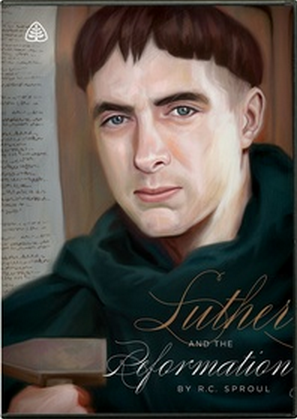
Luther

In celebration of this great day, my good friends at Ligonier Ministries are offering a free download of their 10 message teaching series called ‘Luther and the Reformation’.  This is a great series, and will help you learn not only about the Reformation, but about the man who was instrumental in bringing it about – and the God who worked through him to do so!

Also – the Gospel Coalition have posted ‘9 things you should know about Halloween and Reformation Day’.  Check it out!

Can You Pray for an Hour?

This past Thursday evening at our small group Bible study, we spent time simply in worship and prayer.  We read from Psalm 145, and we sung music to the Lord.  Then we took the remainder of our time to simply pray for all that was going on in our church, our small group and our nation.

During that time I challenged the group to consider praying on their own time for one hour in a single sitting. The reason I did so was because I have personally benefited from extended times of prayer, and know how wonderful that time can be.

Inevitably the question came up “how will I be able to pray for that long? I’m not sure I have enough to talk to God about for that long…” This innocent question is actually rather insulting when we consider the greatness of the God who we are addressing, however it is the first question I had myself several years ago as well. Therefore, I thought it would be profitable to mention a few ideas of how to enrich (and prolong) your time with the Lord:

Begin by Asking for Forgiveness – The first thing we ought to all do when we pray is to confess our sins before the Lord. If you have just confessed “generally” your sinfulness in the past, ask the Lord to bring to mind specific people and instances where you have wronged or been in the wrong. If there are instances that come to mind where you have wronged someone, I would encourage you to stop and call that person and ask for forgiveness. Then go back to your prayer (Matthew 5).

Pray for Humility and Faith – I know that there are some people who feel as though pride is not a big part of their lives, and that they also have faith – at least enough to believe in Jesus. I am here to disavow you of the notion that you don’t struggle with unbelief and pride because EVERYONE struggles with both of these items, even if they manifest themselves in different ways. You may not be a very haughty or arrogant person on the outside in speech, but you might be making very arrogant decisions every day with your life and not realize it. You might take life for granted and feel like certain things are “owed” to you. In a similar way, you might believe that Christ died for you and you have faith from Him to trust that is the case. That doesn’t mean that you aren’t acting out of unbelief on a regular basis. For instance you might feel sorry for yourself and be having an internal pity party about something – perhaps a lost job, or something else. You might be guilty of both pride and unbelief. Self-pity is pride masked as sadness, and it tells God that we don’t believe in His ability to provide for us, or that He has complete control over all things.  As you pray, ask God to reveal these sinful attitudes and for His help to overcome them.

Use Sunday School or Small Group Prayer Requests – our group sends these out in an email format, and your group may do something similar. Perhaps you have been in the habit of writing them down. But how often to do you really sit and pray over them? I would suggest printing them out (as opposed to viewing them on your phone which can lead to distraction) and praying over each concern and praising God for each praise. Also, pray for the people on the list in your own words, asking God to continue to work mightily in their lives, conforming them to His Son’s image.

The same idea holds true for those at your church – grab the church directory and start praying through the names! This is like a virtual prayer walk through the halls of your church.  As you begin to lift up individuals (some of whom you may not know very well if at all) you will come to appreciate all the God is doing in the lives of those who makeup your local body of believers.  Perhaps this experience will also spur you on toward getting to know these people more!

Pray for our Nation – This is something that is often urged, but few take the time to actually execute on the plea. When we lift up our nation, perhaps you ought to consider also looking beyond the normal request for just our President and Congress, and consider the people as a whole. As Americans we are falling into spiritual and moral morass. Pray for revival and for people to repent of their sins and turn to the Lord. Also, pray for our troops and the local leaders who govern our townships, cities, and villages. Pray not only for wisdom, but for their salvation.

Pray for Boldness – When Peter was released from prison in Acts 4 he joined the group of saints who were already praying for him. What did they ask God for? For boldness to continue the work of God. We also need to ask God for boldness, and discernment and for opportunities to share the gospel of Jesus Christ.

Acknowledge His Attributes and Work in Your Life – One of the things we can do as we pray for extended periods of time is to worship God and praise Him for all of His divine attributes.  Ask Him to give you insight as to how you can know Him more intimately, and to reveal His character to you through His Word. Take time to recount to God all that He has done recently, and in past years to bless you, and mature you. Thank Him for being Him! 

Use Scripture in Your Prayer – We are so trained to close our eyes during prayer (usually for the sake of concentration and to lessen distraction) that we often forget that its not a sin to pray with our eyes open! If you can get comfortable praying in this way as you spend time alone with God, then you can open up your Bible and pray certain passages to Him, acknowledging His greatness, His sovereignty, and His grace. Using the Psalms for this is a wonderful experience.  I find it best to know passages ahead of time so that I’m not searching the Scripture during my prayer time. As you begin to do this, you’ll likely see the benefit of memorizing Scripture so that when you don’t have your Bible nearby you can still repeat God’s truth back to Him in humble adoration for all that He has done for you and for the church.

Pray for Your Pastor – I think that sometimes we spend more time emphasizing the need to pray for our nation’s leaders than our church’s leaders. I would encourage you to spend time lifting up the pastoral staff, elders, deacons, and sunday school teachers in your prayers. These people are God’s servants and are spending their time, talents and treasure serving you and the body of Christ every week.  I am also convinced that for this reason they also get more spiritual attacks than the average Joe.  So lift them up and thank God for their work. Ask for protection for them and their family. Ask God for Him to reveal ways in which you can serve them or encourage them – consider dropping them a note to say that you prayed for them today.

Pray for Your Wife and Family – Perhaps this is one that doesn’t need to be mentioned, but sometimes we spend our prayers for these loved ones asking for the same thing over and over again “health, success, safety” and so on. Spend time in this extended period of prayer thinking over each person and asking God for specific things, and for spiritual growth. Ask God to help you serve them better. Ask God to show you ways in which you can help them grow, and ways in which you have failed them and need to ask for forgiveness.

Pray for the Fruit of the Spirit – In Galatians Paul lays out a list of what a Christian ought to look like, and he calls it “the fruit of the Spirit” because it is the Holy Spirit who is working out these beautiful traits in the Christian life (i.e. its not you who are responsible for this transformation). Ask God to help develop your character in order to become more like His Son Jesus, specifically taking inventory of reach “fruit” and asking God for help with specific fruit which may not be so evident in your life.

Conclusion – These are just a few ways you can spend your hour of prayer, I’m sure there are many others I’ve missed here, but I wanted to jot down a few to get your wheels turning!  It is a beautiful thing that God has allowed us to spend time with Him in this way. I’ll close by quoting Theologian Bruce Ware on this matter:

To know the riches of God and the poverty of our human lives is one of the key foundation pillars for prayer. As we pray in humble dependence, God grants from the storehouse of his treasury. And as we are enriched by God, we then give to him our heartfelt thanksgiving and honor and worship. It is the heart of God to give, so he calls his people to ask. 

Study Notes for 10-27-13, John 14:15-24

Below are study notes for John 14:15-24

14:15-17 “If you love me, you will keep my commandments. [16] And I will ask the Father, and he will give you another Helper, to be with you forever, [17] even the Spirit of truth, whom the world cannot receive, because it neither sees him nor knows him. You know him, for he dwells with you and will be in you.

“If” You Love Me

Here we see that the prerequisite for obedience to Christ’s commands is a love for Him.  That makes perfect sense, doesn’t it?  I mean, if we are in love with the Lord Jesus, then of course we will want to obey Him!

But the next thing that should come to mind is that we can’t obey the law even if we do love Jesus.  The disciples don’t even get a chance to ask the question, which should be: How are we supposed to follow all of your commands, or even want to do that all of the time? Instead, Jesus anticipates the problem and promises the Holy Spirit to them.  Until now they have had Him as their helper – that is why Jesus says “another” helper.  The first “helper” was Jesus, and the second is the Spirit (later I will explain the term “paraklētos” which is the Greek term translated “helper” here).

If we examine the passage closely, we’ll notice that all the way from verse 15 or so through about verse 26 there is a theme that Jesus develops for the disciples, namely, that the Holy Spirit will come to represent Himself.  Jesus is going away, and He wants to comfort the disciples and prepare them for that absence by explaining not only what they will need to do, but how they are going to do it.

Now the Holy Spirit’s role is obvious from the verses we read here, and what we’ll read below. Here the Spirit is said to help us by causing us to love Christ. You might not see that immediately, but that is the clear implication.  For those who love Christ obey His commands, and because its clear that Jesus knows we need help to obey commands, we must also need help to love Him.  John would write about this in his epistles:

Beloved, if God so loved us, we also ought to love one another. No one has ever seen God; if we love one another, God abides in us and his love is perfected in us.
By this we know that we abide in him and he in us, because he has given us of his Spirit. (1 John 4:11-13)
 
We love because he first loved us. (1 John 4:19)
 

And so it is that the Spirit is the one who creates in us a love for God. He softens our hearts, and speaks softly to us, explaining the great truths of God’s gospel.  Without His initiative, we would still be dead in our trespasses.

Jesus explains here also that “the world cannot receive Him”, that is to say that on our own we cannot receive the Spirit of God. It isn’t up to us who receives the gift of the Spirit. God is the one who sovereignly chooses who He will to abide with. We’ll address this in more depth in just a moment…

You know Him Already

The last thing Jesus says in these three verses is that the disciples already know the Spirit. This is a mysterious thing.  Pastor Scotty Smith writes:

As Jesus continues instructing his disciples in advance of his ascension we enter the most profound teaching about the Trinity to be found anywhere in the Bible. There is much mystery here, but let us affirm what is clearly in the text. The better we know Jesus, the more Trinitarian we will become. The gospel is the means by which we enter the fellowship, love, and joy shared by the Father, Son and Holy Spirit throughout eternity – a staggering thought indeed.
 

Therefore, we should look closely here at what Jesus is saying and marvel a bit…Jesus can say, “You know him” Because, “he dwells with you and will be in you.” Let’s not miss this, because I think it’s a really important statement. What Jesus is saying is that even though they don’t yet have the Spirit living inside of them, they have been with Jesus, and that is tantamount to knowing the Spirit already. For not only is Jesus filled with the Spirit, but when the Spirit comes it will be as if they have Jesus right there with them – only now instead of having Jesus walking the hills of Judea with them, they will have Him in their hearts.

Why is this important?  Because you have that same Spirit, Christian! You have the Lord Jesus’ Spirit living within you, you are the temple of the living God. His mind, His will, His love for you is embodied in the fact that He sent His Spirit to you.  What I mean by this is that He has a plan and a love for you, and He is working that out through the power and person of the Holy Spirit.

To have the Spirit is to have Jesus, and to have Jesus is to have the Father, as we shall soon see…

This is why it is vital to understand that our God is a triune God, and that He is three persons, each with different roles.

14:18-20 “I will not leave you as orphans; I will come to you. [19] Yet a little while and the world will see me no more, but you will see me. Because I live, you also will live. [20] In that day you will know that I am in my Father, and you in me, and I in you.

First, I want to note that at the end of verse 18 we see here that Jesus says, “I will come to you.” This just further shows what I mention above about how Jesus Himself is coming to us in the form of His Spirit.  They are not one in the same person, rather, they are so alike in their mind and purpose that we cannot tell them apart.  They are on the same mission, and they are both part of the One Godhead. Having the Spirit is tantamount to having Jesus live within us – that is what Jesus is saying here.

The entire idea is tied up together in verse 20, “I am in my Father, and you in me, and I in you.” That is the whole idea!  This is DEEP water we’ve just wandered into.  But what an amazing thing.  Jesus is teaching us something about the Trinity here, and about how role in the Kingdom. He is saying that His bride, that’s us, will be “in Him” and He will be “in us” just as He is “in” the Father. Don’t miss this. Cherish this. This is such profound, such wonderful truth that you can’t forget it.

What are the consequences?  Well I can think of several, but especially one: if we are that close to Christ and that “in” the Trinity, then surely there is nothing (as Paul writes in Romans 8) that can separate us from His love!  In other words, to separate us from the love of Christ would be like separating Jesus from the Father, or the Spirit from Jesus.  It is unthinkable, in fact, it is impossible.

Adoption and Love

Now, secondly, since we have seen and laid the foundation for understanding how Jesus will be with us, and how it is that we will do those greater works (in and because of the Spirit), we see that there is a side-benefit to having Christ go away…we are adopted into His family!

I think that verses 18 and 20 are closely tied to 21 and 15.  What I mean by that is that Jesus is saying that by loving Him, it shows that you are part of His family. Love is a by-product of family membership. Love happens for two reasons: First, because the Spirit has adopted us into the family by regenerating us to everlasting life and enabled us to love as Christ loves, and secondly, because of His work we have a desire to love. So there is His initiating action here, and our obedient response.  Jerry Bridges calls this “dependent responsibility” because not only to re require Him to start us off on the path, but we rely on His help to stay on the path.

So we see here that love is a mark of family membership.  We love because we are adopted!

Lastly, and more particularly to this passage, I want to note how Jesus says, “because I live, you also will live.”  What He means here is to signify the importance of the resurrection. Because we are “in” Him, that means that when He conquered death, when He arose from the grace, when He ascended into heaven, that we, too, arose and are guaranteed heaven.  Why? Because, again, we are “in” Him.  To be “in” the Lord is to be guaranteed all of the promises that He has earned for us.

Listen to how Paul describes the Spirit’s interaction with our spirit in reminding us of this great promised adoption:

For you did not receive the spirit of slavery to fall back into fear, but you have received the Spirit of adoption as sons, by whom we cry, “Abba! Father!” 16 The Spirit himself bears witness with our spirit that we are children of God, 17 and if children, then heirs—heirs of God and fellow heirs with Christ, provided we suffer with him in order that we may also be glorified with him. (Romans 8:15-17, ESV)
 

Therefore, because He earned life, we get life. Because He was perfectly righteous, we are made perfectly righteous in the eyes of God. Because He broke the bonds of sin and death, we too have been loosed from sin, and will never taste spiritual death.

Think about the significance that the resurrection now has in your mind and your life. If Jesus never rose from the grave, then all of this is moot (1 Corinthians 15:12-19). We’d still be dead in our sins. But Jesus is here saying (ahead of all of this even occurring, mind you) that when He rises from the dead, we too will walk in “newness of life.”  This is what Paul was saying in Romans 6:

We were buried therefore with him by baptism into death, in order that, just as Christ was raised from the dead by the glory of the Father, we too might walk in newness of life. 5 For if we have been united with him in a death like his, we shall certainly be united with him in a resurrection like his. 6 We know that our old self was crucified with him in order that the body of sin might be brought to nothing, so that we would no longer be enslaved to sin. 7 For one who has died has been set free from sin. 8 Now if we have died with Christ, we believe that we will also live with him. 9 We know that Christ, being raised from the dead, will never die again; death no longer has dominion over him. 10 For the death he died he died to sin, once for all, but the life he lives he lives to God. 11 So you also must consider yourselves dead to sin and alive to God in Christ Jesus. (Romans 6:4-11)
 

Later Paul adds:

You, however, are not in the flesh but in the Spirit, if in fact the Spirit of God dwells in you. Anyone who does not have the Spirit of Christ does not belong to him. 10 But if Christ is in you, although the body is dead because of sin, the Spirit is life because of righteousness. 11 If the Spirit of him who raised Jesus from the dead dwells in you, he who raised Christ Jesus from the dead will also give life to your mortal bodies through his Spirit who dwells in you. (Romans 8:9-11, ESV)
 

14:21-24 Whoever has my commandments and keeps them, he it is who loves me. And he who loves me will be loved by my Father, and I will love him and manifest myself to him.” [22] Judas (not Iscariot) said to him, “Lord, how is it that you will manifest yourself to us, and not to the world?” [23] Jesus answered him, “If anyone loves me, he will keep my word, and my Father will love him, and we will come to him and make our home with him. [24] Whoever does not love me does not keep my words. And the word that you hear is not mine but the Father’s who sent me.

Here we have once again the reiteration of what Jesus said earlier.  Verse 21 and verse 15 are almost identical. If we love Him we keep His commands.  It harkens us back to the sermon on the mount where Jesus said that those who bare fruit are those who are His.

“Beware of false prophets, who come to you in sheep’s clothing but inwardly are ravenous wolves. 16 You will recognize them by their fruits. Are grapes gathered from thornbushes, or figs from thistles? 17 So, every healthy tree bears good fruit, but the diseased tree bears bad fruit. 18 A healthy tree cannot bear bad fruit, nor can a diseased tree bear good fruit. 19 Every tree that does not bear good fruit is cut down and thrown into the fire. 20 Thus you will recognize them by their fruits. (Matthew 7:15-20)
 

The second thing that Jesus says here is that, “my Father will love him, and we will come to him and make our home with him.”  This is very much like verse 20 when He said, “I am in my Father, and you in me, and I in you.”  The idea here is that not only is Jesus in us, but that the Father is also in us.  This would have been enough to blow the minds of the disciples.

NOTE: this passage, along with others, has been historically used to support to filioque insertion in the Nicene Creed which states that the Spirit proceeds from both the Father and the Son. It is this addition that eventually helped create a schism between the Eastern (Greek) and Western (Latin/Catholic) church (the major historically recognized year of this is 1054, even though the problems and disagreements started well prior to this). 
 

We read earlier how Philip said ‘just show us the Father and that is enough for us Jesus!’  And I explained how the Jews thought of seeking the face of the Lord, and the face of God, and how Aaron’s benediction embodied this idea of being blessed by the revealing of God’s face to us one day. The idea derives from the time when Moses learned that no man can see God and live, but was allowed to view God’s “hindquarters” (in anthropomorphic language).  The idea being that God’s face is so glorious and so bright and resplendent that to view it would be too much for a finite creature to handle – we would die instantly.

Now here we begin to see the sweetness of the revelation we have in NT times. Not only has God sent His Son to us in the incarnation, not only did He die for our sins and impute to us His own righteousness, but He has gone a step further still.  He is going to live within us – His Spirit abiding in us! Meaning, as Jesus says here, that the Father and the Son will essentially be using us as their temple on earth.  They will be manifesting their presence on earth through us!

Have you stopped to consider the ramifications of this? We have become to used to the idea of the immanence of God, that we forget who it is we’re talking about here. We forget so easily in our day that this Being who inhabits the believer is the same one who spoke the universe into existence!

If that doesn’t lend some sobriety to your walk with Christ I don’t know what will.  Because Jesus is reminding us here that if we really love Him, you will pursue Him, you will obey Him, you will understand the reality that the God of heaven and earth has deigned to come down and live – in you!

D.A. Carson is right to mention that, in a very strong way, this passage builds on antecedent passages about the Spirit, the one that I want to mention most particularly is in 4:23-24 where Jesus (speaking to the Samaritan woman) says:

But the hour is coming, and is now here, when the true worshipers will worship the Father in spirit and truth, for the Father is seeking such people to worship him. 24 God is spirit, and those who worship him must worship in spirit and truth.” (John 4:23-24, ESV)
 

Oh the sweetness, oh the condescension, oh the love of God in this! Can you not see how crucial this is to understand?  God has sought out those who will worship Him in “spirit and in truth” – He is doing this by putting His Spirit within us. He wants us to know Him properly, and for our minds to do this He must be the first to act.  He must take the initiative, and He must powerfully work within us. As we read earlier:

It is the Spirit who gives life; the flesh is no help at all. The words that I have spoken to you are spirit and life. (John 6:63, ESV)
 

Jesus is urging us on here to think DEEPLY about the reality of what is going on here. You must take this seriously and understand the privileges and responsibilities associated with being a Christian. This is a call to loving, awe-filled obedience to your Lord.

Not to the World

Lastly, I didn’t want to skip over what Judas says here because he has a good question. He has heard Jesus say already, “For God so loved the world, that he gave his only Son, that whoever believes in him should not perish but have eternal life.”  So if God loved the “world”, why is it that He won’t manifest Himself to the world?

The answer is that while God loves His creation, He has a special and specific plan of redemption for His chosen sheep. We start with the prerequisite understanding that the world cannot receive Him because the world does not want Him.

And contrary to the rejection of Christ, the world will not have a “choice” to accept the Spirit in the same way they saw the incarnate Christ and rejected Him. For the Spirit’s mission, though a continuation of Christ’s, has different objectives, that is to say that Christ is working to accomplish something new through the Spirit (the next phrase of His redemptive plan), namely the quickening of all those whom the Father has predestined to life and the reside within them, fashioning them after His image, and keeping them (preserving them) until the day Jesus Christ returns or we die and join Him in Heaven.

Be sure of one thing: Jesus knows who will believe and who won’t (see John 6:64), and He will not cast pearls before swine. He will not reveal His glory to all. Those who receive the Lord Jesus and the joy of eternal life are those whom He has chosen, those whom His Spirit has softened and called to Himself.  This is, of course, the work of the Spirit. He is the one doing the softening and calling and regenerating.

The world cannot receive the Spirit, not because the Spirit isn’t the one doing the work, not because the Spirit can’t soften the hearts of men. But simply because the Spirit isn’t going to soften the hearts of all men. He isn’t going to be sent to the whole “world”, but rather to those for whom Christ died.

Study Notes 10-20-13: John 14:13-14

Whatever you Ask, I will Give
John 14:13-14
 

14:13-14 Whatever you ask in my name, this I will do, that the Father may be glorified in the Son. [14] If you ask me anything in my name, I will do it.

The Heart of Jesus for His Sheep

This is one of the most comforting verses in all of Scripture. It speaks to the mind of Christ for His sheep. He cares about us; He is our advocate in heaven. Ridderbos says the focus on this section is “the progress of Jesus’ work and the involvement of his disciples in it, as well as doing this work and keeping his commandments, the assistance of the Spirit as the ‘other Paraclete’, and Jesus’ ongoing fellowship with is own.”

Christ begins by emphasizing in verse 13 that whatever we ask and need while He is “away” He will grant us.  He wants us to know that we will be fully equipped if we ask for the resources He gives. He’s speaking most especially, in this context, of spiritual resources. The disciples here aren’t concerned with material blessings, but with the presence of their master. Jesus wants them and us to know that though He is going away, He will still be with us, He will see our trouble, our needs, and He wants them and us to know that we can come to Him with our troubles. This is the universal teaching of the New Testament. Christ pleads for us to come to Him with our desires, needs, and cares. The author of Hebrews reminds us of this, and says:

Since then we have a great high priest who has passed through the heavens, Jesus, the Son of God, let us hold fast our confession. For we do not have a high priest who is unable to sympathize with our weaknesses, but one who in every respect has been tempted as we are, yet without sin. Let us then with confidence draw near to the throne of grace, that we may receive mercy and find grace to help in time of need. (Hebrews 4:14-16)

Paul also says:

This was according to the eternal purpose that he has realized in Christ Jesus our Lord, in whom we have boldness and access with confidence through our faith in him. (Ephesians 3:11-12)

And Christ says in Matthew’s gospel:

Truly, I say to you, whatever you bind on earth shall be bound in heaven, and whatever you loose on earth shall be loosed in heaven. 19 Again I say to you, if two of you agree on earth about anything they ask, it will be done for them by my Father in heaven. 20 For where two or three are gathered in my name, there am I among them.” (Matthew 18:18-20)

Note especially that what He is promises in this Matthew passage is His presence.  All of these things can be done because He is here with us. We can do “greater works” (vs. 12) because He is the one here manifesting His power through us to spread the gospel. Therefore His being here is the key, and we’ll talk more about that and we are to understand this clearly in the verses to come.

Whatever We Want?

As we examine the specific nature of what Jesus is saying here, it is impossible to miss the fact that Jesus says that He will give us “whatever” and “anything” we ask of Him. Those statements seem pretty wide open, don’t they! In fact, it’s statements like these that lead immature believers to assume that they can just waltz into the throne room of the Most High and order whatever happens to be on the menu of their heart at the time. Of course all the while claiming this promise, and fully expecting their demands to be met.

After all Jesus says here just “name it and claim it” right?

Then they are disappointed that their requests are not answered. What’s worse, they chastise other believers who try to correct them on their misunderstanding of the promise. They say, “You just don’t have enough faith!  Don’t be such a hater. Jesus promises this so I’m claiming it – you just don’t have the faith necessary, so don’t hate on me for asking of the desires of my heart!”

In fact, many people take this a step further into the extremely inane and silly by posting “blessings” on Facebook, Twitter and via email.  The thought is that if you tweet, forward, or repost these “blessing” messages that you will be blessed. These messages often make great claims that cannot be substantiated. One such message I read recently said this:

REPOST:

Please read this…Not Joking…

God has seen you struggling with something. God says it’s over! A blessing is coming your way. If you believe in God, send/post this message on and please don’t ignore it, you are being tested. God is going to fix two big things tonight in your favor. If you believe in God, drop everything and pass this on.

Now where in the world do things like this come from? From the pit of Hell. Let me explain why using this, rather typical message, as an example.

Note that the message above claims that God will “fix two big things tonight in your favor.”  It presupposes that the person posting has the power (not merely the faith) to assert that God is going to “fix” these things (whatever that may mean). Of course this will ONLY happen if you repost the message. As if God wants to see that you love Him by reposting this error-filled tripe. The arrogance of these little blessing messages can easily be missed. This one even claims that God will “fix” specifically TWO things “in your favor” – which presupposes that by reposting, your subjective opinions and desires will be immediately bowed to by the God of the universe. He will see your post, and immediately snap into action!

This isn’t new my friends. This is superstition masquerading as true spirituality, and it preys on the uneducated and easily manipulated. The fool in his folly not only reposts, but chastises others for correcting his idolatry! This same superstitiousness was used in the medieval ages to manipulate the uneducated poorer classes to support crusades, despotic and evil popes, corrupt kings, and twisting of church doctrine until it was used to justify every wish of those in power.

And what is worse, we commonly wink at this. We let it go. We see someone we know posting it, and don’t say anything. For those who do stand up and correct a brother or sister, be warned, there will be consequences. There will be backlash. Superstitious, uneducated foolishness parading as Christianity is Satanic. Period.

As we examine how to correctly understand the passage, it will become clear why this is such a distortion of the passage, and how Christ expects us to understand fellowship with Him.

How to Rightly Understand this Passage

First, I want to remind us that these great promises of Christ are not new in the sense that they are tied to His character, for God has always been desirous that we have a heart which mirrors His. In fact, we are reminded of how closely aligned with Christ’s words are those from Psalm 37:4-5, which says:

Delight yourself in the Lord,
and he will give you the desires of your heart.
Commit your way to the Lord;
trust in him, and he will act.
 

That verse first says “take delight in the Lord” and the consequence of this is that he will give us the desires of our hearts – in other words, he will give us Himself if we first are delighting in Him, because it is presupposed that the delight of our heart and its chief desire is “the Lord.” Therefore, He will bless us with our greatest desires when those desires match His!

For more evidence of this, look at what John says in his first epistle:

Beloved, if our heart does not condemn us, we have confidence before God; 22 and whatever we ask we receive from him, because we keep his commandments and do what pleases him. (1 John 3:21-22)

We’ll speak more to this keeping of the commandments a little later on, but note that we have confidence to ask “whatever” we need and know He will give us these requests if we are keeping His commandments – we keep His commandments if we are walking in the Spirit. If we are acting this way and in this mindset then necessarily what will occur is that we will be asking for things that accord with His will.

Now turning back to the passage in John 14…we cannot isolate this from verse 12, which says that we will do “greater” works than what Christ did on earth. It is in the context of Christ carrying out His work in us that He gives us the reassurance of His fellowship with us. The idea is that as we are doing His works, not greater in power but in number, He is the one working through us.  If we need help (and we do), then we are to come before His throne to ask for that help.

Furthermore, Jesus says here that he will give us what we ask in order that “the father may be glorified in the son.” This statement qualifies our requests – it shows us the purpose for the request.  Jesus is saying that the whole purpose of Him giving you “anything” or “whatever” you ask is that the Father might be glorified!

This happens in the following ways:

  1. When we ask for things in the name of the Son the Father is glorified in the lordship of the Son, because this lordship exhibits our desire to please Him, and mirrors the relationship that the Father and the Son have together. In other words, the Father is glorified in the Son because Christ is glorified in us. The Trinitarian relationship is made manifest, and it reflects back the Father’s own glory (Heb. 1:3).
  2. The Father is glorified in the Son because when the Son answers our requests He exhibits his power, mercy, grace, kindness and love – all of which are character qualities shared with the Father. Therefore, by His acts of love on our behalf, the Son exhibits the heart of the Father.
  3. The Father is specifically glorified in the Son because “whatever” He grants will be in accordance with the “greater works” (vs. 12) of the Son. In other words, when we ask for “whatever” we need, it is in the context of verse 12 and doing His works, which is to say that we are asking for His help to do His work. We are basically bowing before Jesus and saying, “this is Your work Lord, give us help to do this work of Yours.” The Father is glorified in this because it is the Son doing the work and it magnifies the Son’s work and the Father’s plan and character as (again) mirrored in the Son and His creation (us).

In sum, when the Son is glorified, the Father is glorified because the Son acts according to what he knows will delight His Father. The Father’s supreme plan and headship over all things is brought to glorious revelation before his creation and within the Trinity itself when the Son acts on behalf of his creation.

Ridderbos affirms this view, and though these comments are extensive, I think they are right on point, and worth soaking in:

…the saying here is not intended as an unconditional pledge that every believing prayer, of whatever content, will be heard. The saying must be understood in immediate connection with what precedes: it ties in with ‘for I go to the Father’ and explains the ‘for’ by suggesting that from his position in heaven Jesus will do whatever the disciples ask with a view to the glorification of the Father in the Son. This saying must always, in fact, be understood anew in this context, with regard to both what Jesus’ disciples may ask of him, the Exalted One, and what they may expect as answers in this earthly dispensation. The main point is that by putting so much stress here an in what follows on prayer in his name, Jesus is pledging to his disciples that he is not withdrawing from them by his departure but will be able, because of his heavenly glory, to give them everything they will need for the continuation of his work on earth, and he refers them to prayer as the way of his continuing fellowship with them.

Therefore, the Son would never grant us “anything” that did not conform to His ultimate desires and plan for our lives. He will not just give us “whatever” if “whatever” does not first conform to His plan for us. In fact, we must admit that there are times that the Son give us things we do not want in order to prepare us for the thing we want most, namely Himself and heaven. So that in all things the Son is acting on our behalf and for our best interests, even when we stray from asking the things that accord perfectly with His will. This is why, by the way, it is so very important that Christ be fully divine and fully God.  He must know all things because if He didn’t know all things, then our theology would be mangled, and our hope would be in ourselves rather than in Christ’s omniscient all-powerful guiding hand.

When we replace superstition for true spirituality, we replace Scripture with myth and exchange Christ’s authority for a false authority (for there is no other true authority in the universe, only pretenders, i.e. Satan, and ourselves). When you “name it and claim it” or “repost to get blessed” you make God your cosmic butler who will “fix” things in conformity to your plan and not His.

He has a purpose, and His purposes will be carried out in and through us because He is here with us. “The Son’s purpose does not change: he enables his own to do ‘greater things’: in order that he may bring glory to the Father” says Carson.

D.A. Carson gives a wonderful summary of verses 12-14 and prepares us for the following passage:

Glorified with the glory he had with the Father before the world began (17:5), the Son is no longer limited by the pre-death humanness that characterized his ministry. At that point redemption is won, the kingdom of God is triumphantly invading the nations with saving and transforming power, the locus of the covenant community stretches outward from its Jewish confines to embrace the world, and the disciples themselves are empowered and equipped to engage in far-reaching ministry. The latter turns on the first of the Holy Spirit, which gift is about to be introduced into the discussion (vv. 15ff.).

Study Notes 10-13-13: To Know Me is to Know My Father

14:7 If you had known me, you would have known my Father also. From now on you do know him and have seen him.”

Jesus is the Beauty and Radiance of the Father

First, Jesus is saying here that I am so much like the Father, that once you know me, you will know the Father.

Hebrews tells us that, “He is the radiance of the glory of God and the exact imprint of his nature” (Heb. 1:3a), and Paul adds, “He is the image of the invisible God” (Col. 1:15a).

John testified that the disciples beheld His glory, “glory as of the only Son from the Father, full of grace and truth” (John 1:14) and Peter said, “we were eyewitnesses of his majesty” (2 Peter 1:16b).

To really understand how Jesus is like the Father is difficult to know. But I think we can assume that in His character (His characteristics and personality etc.), ontology (His being and questions of His eternity etc.) and substance (what His is made of etc.), He is the same as God the Father. This was the subject of much debate in the 3rd and 4th centuries, and was finally settled (for the most part) at the Councils of Constantinople in 381 and Chalcedon in 451 where it was agreed upon and affirmed that Christ is of the same “substance” (homoousios) as the Father, although He is a different “person” (this is just a summary and doesn’t do the debate justice, obviously).

His Gracious Self-Disclosure

Secondly, I was struck this week as I was studied this verse by something that Leon Morris said in his commentary on John:

Throughout the Old Testament, as Dodd has pointed out, the knowledge of God is not normally claimed. It is looked for as a future blessing, or people may be urged to know God, but it is very rare indeed to find assertions that people know God (as in Ps. 36:10). John sees this whole situation as changed in Christ. As a result of what he has done (“front now on”) his followers really know God. It is a revolution both in religious experience and in theological understanding.

John provided context for this in chapter one:

No one has ever seen God; the only God, who is at the Father’s side, he has made him known. (John 1:18)

This is what theologians call “progressive revelation” because God has progressively revealed Himself to mankind. He did so most fully in the incarnate Son, and He continues this work in the abiding Spirit who takes up residence within His children.

As I began meditating upon the heart of Christ to make known the Father to us, and the obvious desire for the Father for Christ to reconcile us to Himself, it just blew me away. Contrasted against my sinfulness who am I to deserve such a gift? Why does He want to know me? How is that possible?

Let us simply reflect on the intimacy Christ has given us with the Creator of all things. That somehow we can have a personal relationship with God, and get to “know” Him. That, in fact, to know Him is what we were created for. These truths just leave me speechless.

This was the mission of Christ, to reveal the Father to sinful men as He had never been revealed before. His gracious self-disclosure ought to bring us to worship, and leave us with thankful hearts today.

Note the Eschatological Shift…Things Are Different Now

Lastly, (and really flowing from point two) the eschatological significance of Jesus’ words “from now on” can’t be underestimated. Like in Romans 8:1 where Paul sees a significant redemptive-historical shift (“There is therefore now no condemnation for those who are in Christ Jesus”), Jesus says that ‘from now on you will have a relationship with the Father unlike ever before because I have “made Him known.”’

Herman Ridderbos says, “Jesus connects their knowledge of the Father and their life in fellowship with the Father not only to the future but above all to the faith experience they have received in their earthly contact with him.”

Therefore, unlike at any other time in the history of humanity, God’s people will have an unprecedented intimacy with their Creator, and it will come through the person and work of Jesus Christ.

14:8 Philip said to him, “Lord, show us the Father, and it is enough for us.”

Show Us the Father

For the Jews, the ultimate blessing was to see the Father’s face. They lived in the hopes of one day seeing His face. As R.C. Sproul says, “It was as if Philip said: ‘Jesus, we’ve seen some fantastic things – You changed the water into wine, You fed the five thousand, You walked on water…But now, please give us the big one, then we’ll be satisfied. Do just one more miracle. Peel back the veil and let us see the face of God.’”

The sentiment that Philip expresses here is probably best expressed in the Aaronic blessing in Numbers:

The Lord bless you and keep you;
the Lord make his face to shine upon you and be gracious to you;
the Lord lift up his countenance upon you and give you peace.
So shall they put my name upon the people of Israel, and I will bless them.
(Numbers 6:24-27)
 

We also see this in Moses who asked God to allow him to see Him in His glory. Do you remember God’s response? Let’s read it together:

Moses said, “Please show me your glory.” 19 And he said, “I will make all my goodness pass before you and will proclaim before you my name ‘The Lord.’ And I will be gracious to whom I will be gracious, and will show mercy on whom I will show mercy. 20 But,” he said, “you cannot see my face, for man shall not see me and live.” 21 And the Lord said, “Behold, there is a place by me where you shall stand on the rock, 22 and while my glory passes by I will put you in a cleft of the rock, and I will cover you with my hand until I have passed by. 23 Then I will take away my hand, and you shall see my back, but my face shall not be seen.” (Exodus 33:18-23, ESV)

This reminds us again of what John said at the beginning of the gospel, “No one has ever seen God (John 1:18a).”  John Frame says this verse “means that no one has ever seen God apart from his voluntary theophanic-incarnational revelation. ‘God the One and Only, who is at the Father’s side, has made him known’ (1:18b).”

If the Jews lived longing to see God’s face, how much more ought we who have His Spirit living within us live Coram Deo (before the face of God).

14:9-11 Jesus said to him, “Have I been with you so long, and you still do not know me, Philip? Whoever has seen me has seen the Father. How can you say, ‘Show us the Father’? [10] Do you not believe that I am in the Father and the Father is in me? The words that I say to you I do not speak on my own authority, but the Father who dwells in me does his works. [11] Believe me that I am in the Father and the Father is in me, or else believe on account of the works themselves.

You can just feel the heart of Christ here and I’m sure Philip could as well. It seems to be a tone of exasperation, or at least a gentle rebuke. I don’t think its fair that we judge these disciples too harshly though – would we have been any better able to discern what Jesus was saying? Given the world around them, they were actually picking up ten times more than all the other men who had decades of scholarship and theological training under their belts.

Nonetheless, Jesus gets the attention here of the entire group (the word “you” is plural in the Greek, and so He is speaking to the entire group and not just Philip), and doubles down on what He had just emphasized about the unity of the Godhead.

The Nature of the Trinity: Diversity, Unity, and Equality

Jesus says that, “I am in the Father and the Father is in me” and then “Believe me that I am in the Father and the Father is in me.”  How are we to understand this correctly and clearly?

First, within the Trinity we must understand that there are three key principles to keep in mind if we are to rightly understand the nature of God: Diversity, Unity, and Equality.

Statements of Unity are obvious in this passage: “The father is in me”, “The father who dwells in me” “I am in the Father and the Father is in me”, “Whoever has seen me has seen the Father.”

Diversity is assumed in that Christ is referring to a different person than Himself when He refers to the “Father” – for instance He says, “I do not speak on my own authority, but the Father who dwells in me does his works.” Therefore, we assume that just as there is unity, there is diversity.

Finally, there is also Equality within the Godhead. The Son and the Father and the Spirit are equal in power and being and substance. However, they have different roles. It is to the nature of these diverse roles that Christ speaks when He says “I do not speak on my own authority.” He is not saying that the Father is “above” Him in rank, but rather each person of the Godhead plays a different role in the execution of their redemptive plan. The Son is not subordinate to the Father in rank, but is submissive to the Father in role.

This is difficult to get straight in our minds without slipping into some kind of heretical error, and I’ve found that word pictures always end up leading to promoting either modalism, or some kind of monophysitism.

“Miracles are Christological Sign-Posts”

Lastly, Jesus says that if they can’t find the faith to believe what He is saying about the nature of the Godhead, then at least believe because of the “works.” What does this mean? Why should miracles “convince” them? Well, its not necessarily about “convincing” or showing off power.

As D.A. Carson says:

Thoughtful meditation on, say, the turning of the water into wine, the multiplication of the loaves or on the raising of Lazarus will disclose what these miracles signify: viz. that the saving kingdom of God is at work in the ministry of Jesus, and this is in ways tied to his very person. The miracles are non-verbal Christological signposts.

Leon Morris is also helpful, “Faith on the basis of miracles is better than not faith at all. In John the characteristic of the miracles is not that they are wonders, nor that they show mighty power, but that they are ‘signs.’ For those who have eyes to see they point people to God.”

The power that has been manifested in the ministry of Jesus is evidence that He is not only from God (as even Nicodemus and the Sanhedrin understood cf. 3:2) but that He in fact is God.

14:12 “Truly, truly, I say to you, whoever believes in me will also do the works that I do; and greater works than these will he do, because I am going to the Father.

It certainly must have bewildered the disciples (at this point at least) to have heard Jesus say that they would do even greater works than what He had done. But as F.F. Bruce says, “His promise indeed came true: in the first few months after his death and resurrection many more men and women became his followers through their witness than had done so during his personal ministry in Galilee and Judea.”

Morris comments, “After his departure his followers were able to influence much larger numbers of people and to work in widely scattered places.”

We will do “greater” works than Him in that we will be spreading the gospel empowered by the spirit to millions of people for thousands of years.

His disciples can do this “because” He went to the Father, namely because He would send “another helper” – the Holy Spirit – which we will shortly discuss.

Some stumble over the idea that the disciples could have done “greater” works than Christ, but once we understand what Jesus means by “greater”, there is no issue here. First, perhaps its better for us to think of “greater” as “more” rather than “better”.  As John MacArthur says, “The greater works to which Jesus referred were not greater in power than those He performed, but greater in extent.”

But secondly, the phrase is not quite so offensive when we realize that it is not as if what we do is superior in anyway to what He did, because what we do is not of us in the first place. Our work is not our work; it is His. It is him who is working through us.

Therefore, when he says “greater works than these will he do” (notice he’s talking to the “believer” and not specifically just to the disciples here in his immediate presence – there is a definite look toward legacy here) he says that because its him who will be doing the works of salvation through us!

The emphasis is not on miracles of healing but on the miracle of salvation, as MacArthur says, “…those physical miracles were not primarily what Jesus had in mind, since the apostles did not do more powerful miracles than He had. When the Lord spoke of His followers performing greater works, He was referring to the extent of the spiritual miracle of salvation.”

And so it is that He will be glorified in and through us. He will continue His work of saving the lost on earth until He comes back again. As Morris says, “…in doing their ‘greater things’ they were but his agents”, and so too are we.  What a great privilege!

Why Read the Old Testament?

In the coming days, a group of people in my church and friends from around the country will be starting to read through the Old Testament together again, and it’s sure to be a very interesting and encouraging experience.

But why would you want to do this?  Why take all that time to listen to, or read through the OT texts? Isn’t it good enough to be reading the New Testament in our devotions? The short answer is, as you might guess, “No!”  This isn’t about meeting a quota, or doing what is “good enough”, that’s certainly NOT the point. But what IS the point? Here are a few good reasons why you should consider reading the Old Testament devotionally every day…

First, the OT gives us the context for the New Testament (NT). We can understand the redemptive nature of NT history better if we know the history leading up to Christ’s incarnation and earthly ministry. As we get a sense for the context in which Christ came, we grow to appreciate God’s control over history even more.  Unlike most eastern thought, Christians believe that history is linear – God is driving toward a point.

David Murray puts it this way, “Many history books simply relate the what, when, where, and how of each event. Not many attempt to answer the “Why?” question, and those that do usually prove laughably unreliable. In contrast, biblical history has a clear purpose: it is a progressive revelation of the mind and heart of God for the benefit of needy sinners. God is the subject and the hero of the Bible.”

Second, once we become familiar with the OT, we begin to see how Christ is the fulfillment of types and shadows, and the epicenter of redemptive history and the story of humanity. Our story is really HIS story.  Seeing typology fulfilled in Christ only comes when you have studied and read the OT.

Sam Storms says, “In most cases the Old Testament type finds a deeper realization or expression in some aspect of the life of Jesus, his redemptive work, his judgments, or in his future return and reign. The correspondence is based on the premise that god controls history.”

Finally, but not by any means “lastly”, as Christians we believe that ALL Scripture is profitable for renewing our minds. Paul reminds Timothy of this, “All Scripture is breathed out by God and profitable for teaching, for reproof, for correction, and for training in righteousness, that the man of God may be complete, equipped for every good work” (2 Timothy 3:16-17).

This means that as we read the Old Testament, the words of God are literally renewing our minds, and changing our hearts.  They are equipping us to serve and enjoy God better, because we can help others understand the Scriptures more clearly, and we can appreciate and love God for all that He is and has done as our context is widened.

In conclusion, there are so many reasons to read the whole Bible, and I’ve just scratched the surface here, but needless to say, it is a very profitable exercise, and if you’d like to join a reading group and get to know the OT a little better, feel free to send me a message!